How the knight moves
The knight jumps in an L, and is the only piece that can jump.
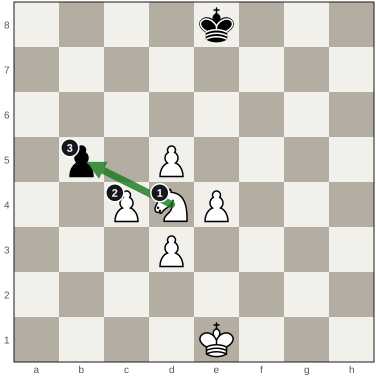
The idea
The knight jumps in an L, and it is the only piece that can jump.
- The knight moves in an L: two squares one way, then one to the side.
- Its own pawns stand on all four sides, but a knight jumps over pieces.
- So it can still land on the black pawn and take it.
In a game: A knight cannot be blocked, so count its jumps even in a crowded position.
The lesson
The knight moves in an L: two squares in one direction and then one square to the side. It is the only piece that can jump over others. The marked squares are every place this knight can go.

Find the move
Take the pawn on f5 with the knight.

A hint
Two squares to the right and one up.
Show the answer
1. Nxf5
The knight jumped two squares along the rank and one up. It captures by landing on the piece, as every piece but the pawn does.
Find the move
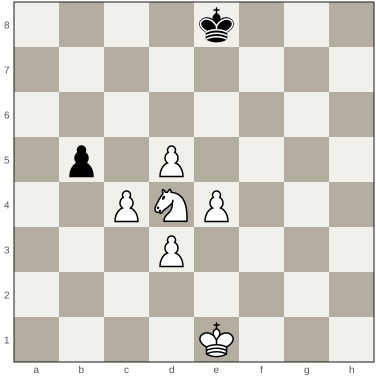
The knight has its own pawns on all four sides. Can it still take the pawn on b5?
A hint
Two squares left and one up, over the pawns.
Show the answer
1. Nxb5
Yes. A knight jumps, so the pieces around it do not block it. That is its great strength in a crowded position.
A question
A knight stands in the corner, on a1. How many squares can it move to?

Show the answer
2.
Right. From a1 a knight can reach only b3 and c2. A knight in the corner is weak because it has so few moves.