Chess lessons, from the first move to the endgame
84 lessons in 8 topics, each with its positions drawn and its questions answered. 27 are free for everyone; the rest come with Pro. Read any of them here, then play them on the board in GreyChess.
Chess basics
How the pieces move, and what check, checkmate and stalemate mean.
 The board and the piecesThe squares, files and ranks, and where every piece starts.Beginner · 5 min · Free
 How rooks and bishops moveStraight lines for the rook, diagonals for the bishop.Beginner · 6 min · Free
 How the queen and king moveThe queen goes anywhere in a line; the king takes one step.Beginner · 5 min · Free
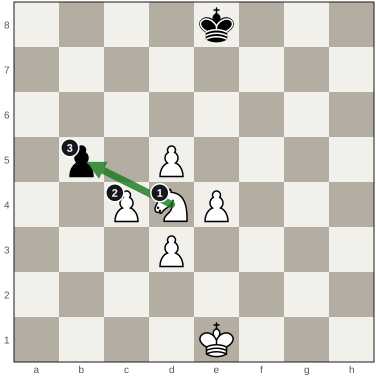 How the knight movesThe knight jumps in an L, and is the only piece that can jump.Beginner · 5 min · Free
 How the pawn movesPawns march forward, capture diagonally, and can become queens.Beginner · 6 min · Free
 Castling and en passantThe two special moves, and when they are allowed.Beginner · 7 min · Free
 Check, checkmate and stalemateHow to get out of check, and how a game is won, lost or drawn.Beginner · 8 min · Free
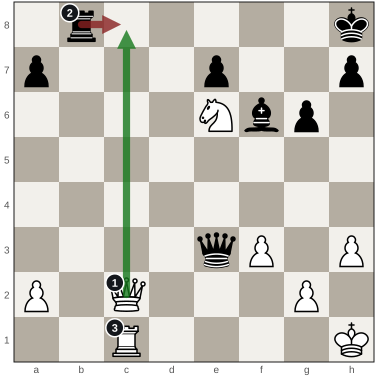 What the pieces are worthPoints that help you judge a trade, and why a checkmate beats them all.Beginner · 6 min · Pro
 Reading chess notationHow moves are written, so you can follow a book or a game.Beginner · 6 min · Pro
Checkmate patterns
The patterns that end games, and the basic mates with a lone king.
 The back-rank mateA rook or queen mates a king shut in by its own pawns.Beginner · 6 min · Free
 Mate with the queenMate a lone king with your queen and king, and keep clear of stalemate.Beginner · 8 min · Free
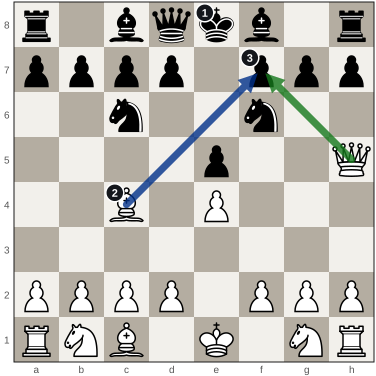 Finding mate in oneTest every check with three questions, and you will not miss a mate.Beginner · 7 min · Free
 The ladder mateTwo rooks push a lone king to the edge, one rank at a time.Beginner · 6 min · Free
 Knight and rook matesAnastasia’s mate and the Arabian mate: the knight guards, the rook strikes.Intermediate · 8 min · Pro
 The smothered mateA knight mates a king whose own pieces take away every square.Intermediate · 7 min · Pro
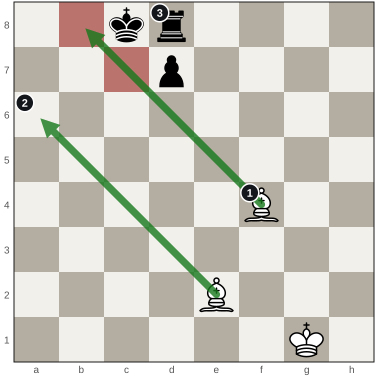 Mates with two bishopsBoden’s mate and the double-bishop mate: diagonals that work together.Intermediate · 7 min · Pro
 Queen mates to knowThe epaulette mate, the dovetail mate, and how a queen finishes a game.Intermediate · 7 min · Pro
 Mate in twoStart with the checks, and ask what the other side can do.Intermediate · 8 min · Pro
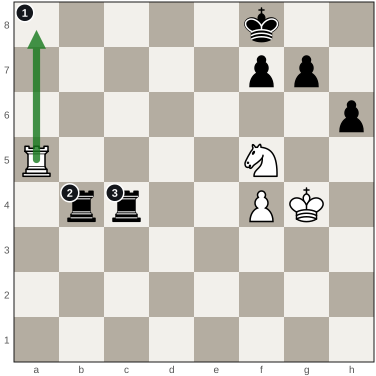 Mate in threeLonger mates are found one forcing move at a time.Intermediate · 8 min · Pro
Chess tactics
Forks, pins and the other tricks that win material.
 ForksOne move that attacks two pieces at once, so you win one of them.Beginner · 9 min · Free
 PinsA piece that cannot move without exposing something worth more behind it.Beginner · 9 min · Free
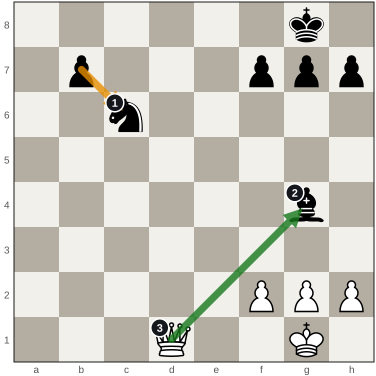 Loose piecesFind the pieces nothing defends, and count before you capture.Beginner · 8 min · Free
 SkewersThe pin turned round: the valuable piece must move, and you take the one behind it.Intermediate · 8 min · Pro
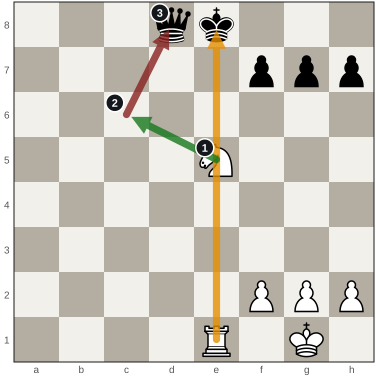 Discovered attacksMove one piece and let the piece behind it attack, often with check.Intermediate · 9 min · Pro
 Double checkTwo pieces give check at once, so only the king can move.Intermediate · 8 min · Pro
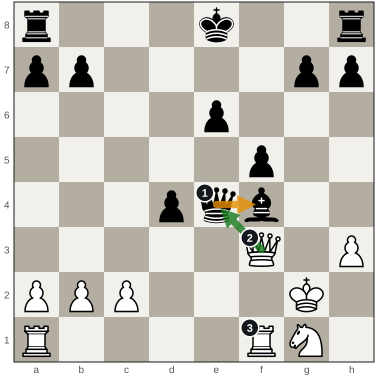 Remove the defenderTake the piece that guards your target, and the target is left without protection.Intermediate · 8 min · Pro
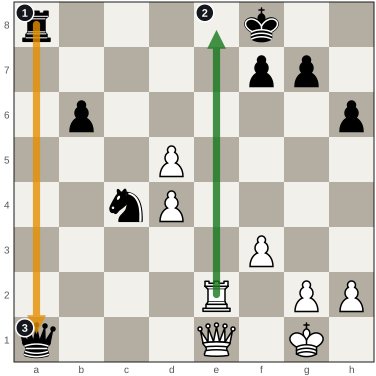 Deflection and attractionPull a defender off its post, or drag a piece onto a bad square.Intermediate · 9 min · Pro
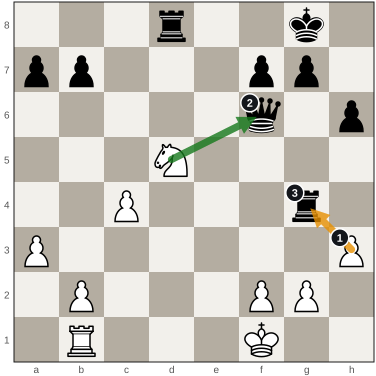 The in-between moveSlip in a check or a big capture before the move everyone expects.Intermediate · 8 min · Pro
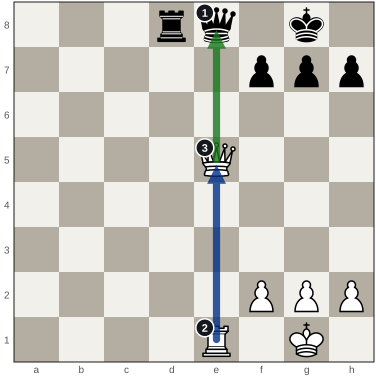 X-rayA piece that attacks or defends through another piece.Intermediate · 8 min · Pro
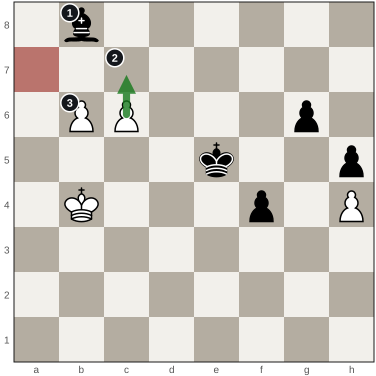 Trapped piecesA piece that is attacked and has nowhere safe to go is lost.Intermediate · 8 min · Pro
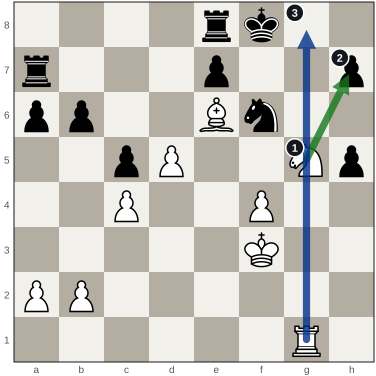 Clearance and interferenceClear the way for your own piece, or cut a line between two enemy pieces.Intermediate · 9 min · Pro
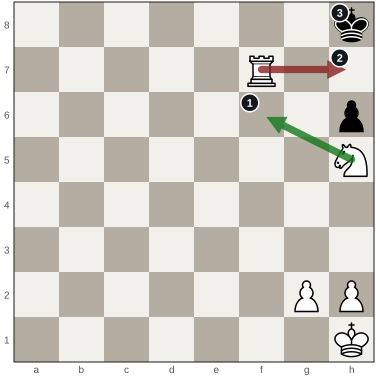 Quiet movesA move with no check and no capture, and a threat that cannot be met.Advanced · 8 min · Pro
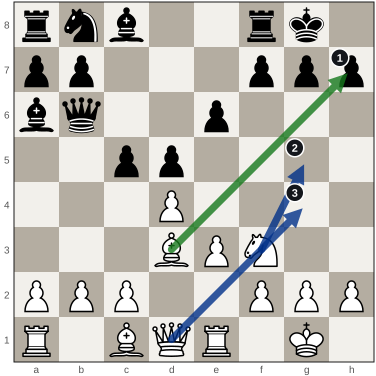 Attacking the kingSacrifices that open up a king, and how to tell when an attack is sound.Intermediate · 10 min · Pro
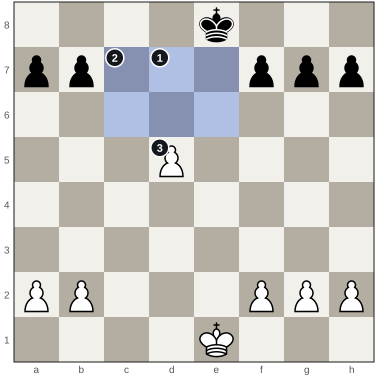 Passed pawns and promotionPush a passed pawn to a new queen, and know when to promote to something else.Intermediate · 10 min · Pro
 Zugzwang and the oppositionA position where every move makes things worse, and how the kings use it.Intermediate · 9 min · Pro
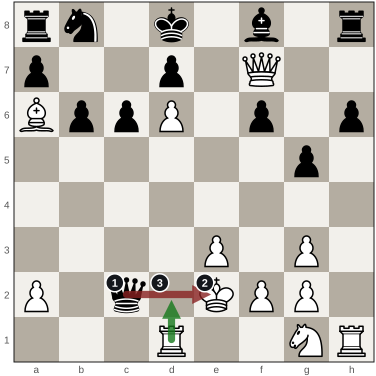 DefenceFind the threat first, then find the best answer to it.Intermediate · 9 min · Pro
Chess endgames
The positions every player should know how to win or hold.
 OppositionFace the enemy king with one square between: whoever has to move gives way.Beginner · 8 min · Free
 Key squaresReach a key square with your king and the pawn queens, whoever is to move.Beginner · 9 min · Free
 The rule of the squareCan the king catch the pawn? Draw a square from the pawn to the queening square.Beginner · 8 min · Free
 Mate with the rookCut the king off, walk your king up, take the opposition and give the last check.Beginner · 12 min · Free
 Mate with two bishopsTwo bishops mate a lone king. A bishop and a knight can too, if the king is driven to the right corner.Intermediate · 12 min · Pro
 The Lucena positionWin with a pawn on the seventh: build a bridge with your rook to shield your king from checks.Intermediate · 12 min · Pro
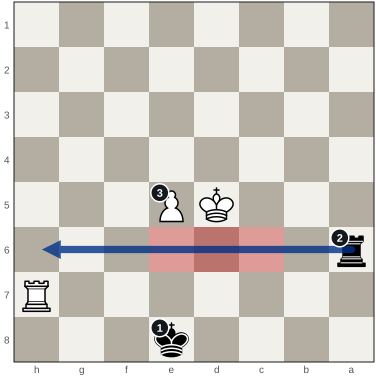 The Philidor defenceHold a rook ending a pawn down: the rook on the sixth rank, then behind the pawn.Intermediate · 10 min · Pro
 Active rooksCut the king off, keep your rook behind the enemy pawn, and check from far away.Intermediate · 14 min · Pro
 Queen against a pawnA queen stops a pawn on the seventh, but a bishop or rook pawn can draw if the king is far.Intermediate · 12 min · Pro
 The wrong bishopA rook pawn needs the right bishop. Opposite-coloured bishops often draw even a pawn up.Intermediate · 11 min · Pro
 The active kingUse your king, count the moves in a pawn race, and look for zugzwang.Intermediate · 11 min · Pro
Chess openings
How to start a game, and the openings players choose most.
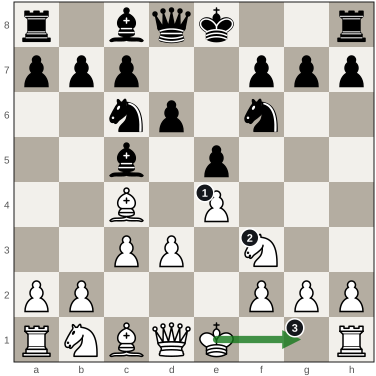 Opening principlesFight for the centre, bring out your pieces and castle: three aims for your first moves.Beginner · 7 min · Free
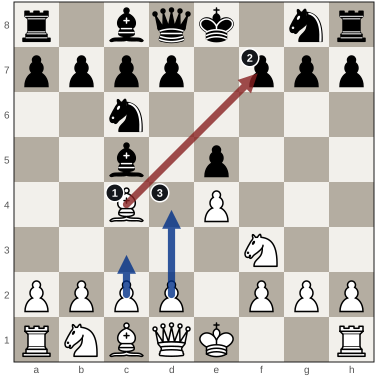 The Italian GameA classic where both sides develop fast and White’s bishop eyes the weak f7.Beginner · 8 min · Free
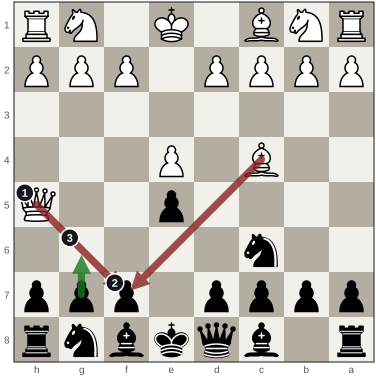 Traps to knowSix famous traps, how each one works, and how to avoid falling for it.Beginner · 10 min · Free
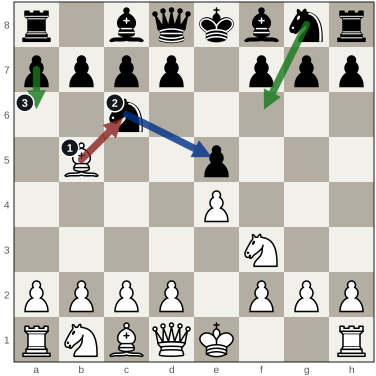 The Ruy LopezThe bishop pressures the knight that guards e5. Black can answer with the Morphy or the Berlin Defence.Intermediate · 12 min · Pro
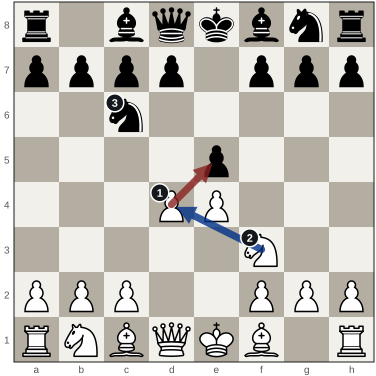 The Scotch Game and the Four KnightsOpen the centre at once with the Scotch, or develop four knights and keep it simple.Intermediate · 11 min · Pro
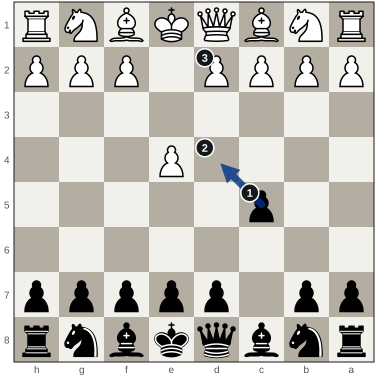 The Sicilian DefenceWhy Black answers 1.e4 with c5, what the Open Sicilian does to the board, and the Najdorf and Dragon.Intermediate · 11 min · Pro
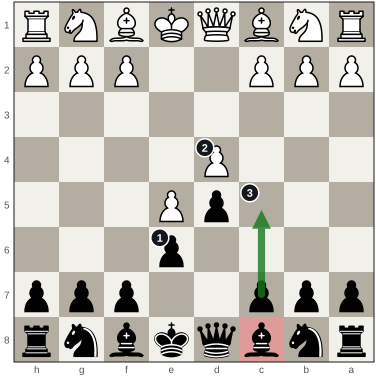 The French DefenceBlack builds a pawn chain with e6 and d5, and White chooses between the Advance and the Exchange.Intermediate · 10 min · Pro
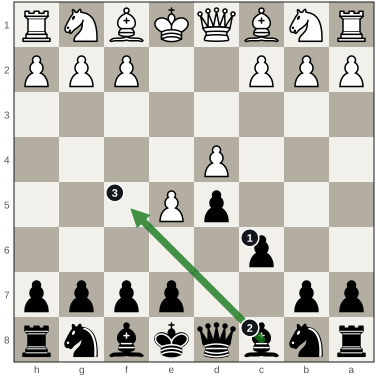 The Caro-Kann DefenceBlack supports d5 with a pawn from c6 and brings the light-squared bishop out first.Intermediate · 10 min · Pro
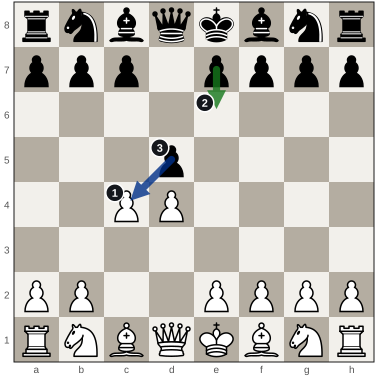 The Queen’s GambitDeclined or accepted: why it is not a real gambit, and what each side wants.Intermediate · 11 min · Pro
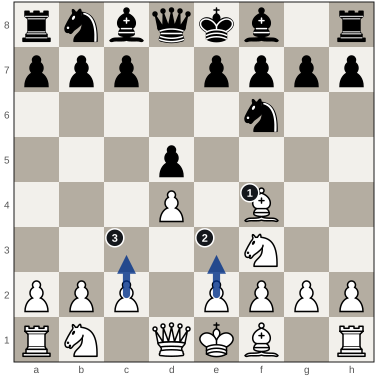 The London SystemA set-up that White can play against almost anything, and how Black can meet it.Intermediate · 10 min · Pro
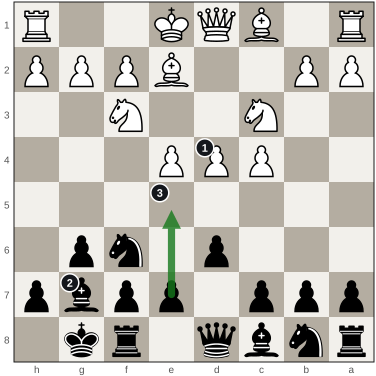 The King’s Indian DefenceBlack lets White build a big centre, fianchettoes the bishop and attacks with ...e5 and ...f5.Intermediate · 11 min · Pro
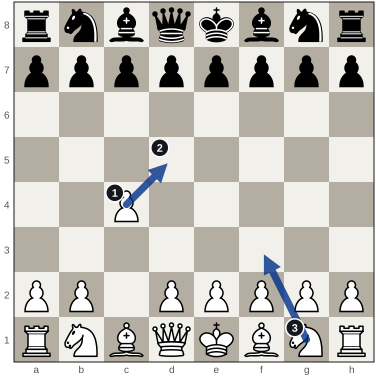 The English and the RétiFlank openings that fight for the centre from the side, and how they change into other openings.Intermediate · 10 min · Pro
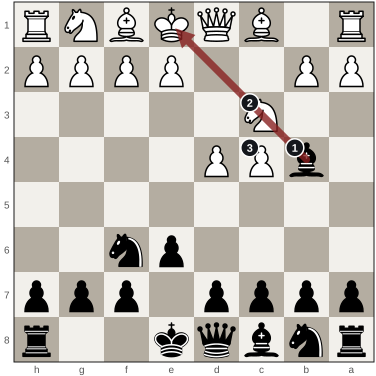 The Slav and the Nimzo-IndianTwo solid answers to 1.d4: one keeps the bishop free, the other pins a knight to damage the pawns.Intermediate · 12 min · Pro
Chess strategy
Plans for the middlegame: what to aim for when nothing is hanging.
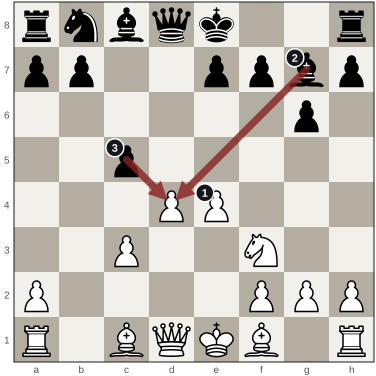 The centreWhy the four middle squares matter, and two ways to fight for them.Beginner · 7 min · Free
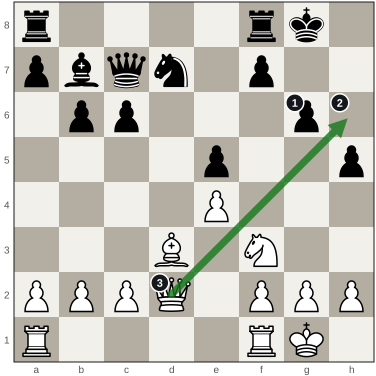 King safetyCastle early, keep the pawns and files near your king safe, and know when waiting is fine.Beginner · 11 min · Free
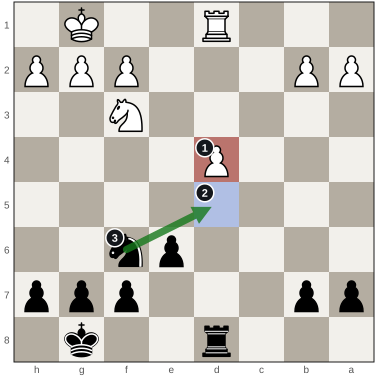 Pawn structureIsolated, doubled, backward and passed pawns: how to spot them, and what to do about them.Beginner · 12 min · Pro
 Passed pawnsWhy an outside passed pawn is so strong in endings, how connected pawns roll, and how to blockade.Intermediate · 12 min · Pro
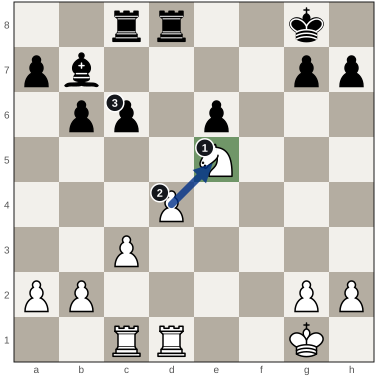 OutpostsA knight on a square no pawn can attack is hard to drive away, and worth a lot.Intermediate · 10 min · Pro
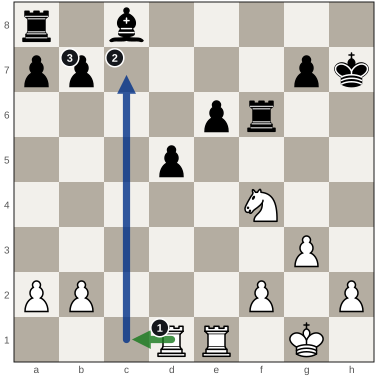 Open filesRooks like files with no pawns, and the seventh rank is where they can do a lot of damage.Intermediate · 10 min · Pro
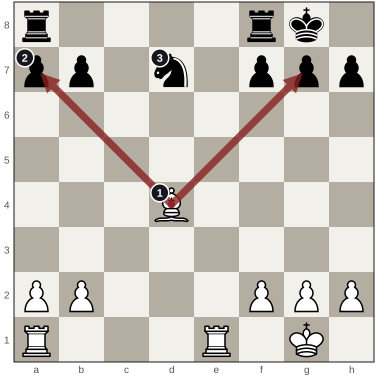 Bishop or knight?Bishops like open positions with pawns on both wings, and knights like closed ones.Intermediate · 10 min · Pro
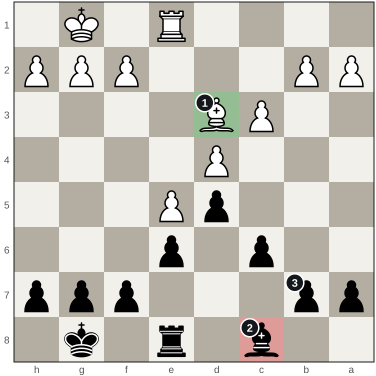 Good and bad bishopsA bishop is only as good as the diagonals its own pawns leave open, and the bishop pair is an edge.Intermediate · 10 min · Pro
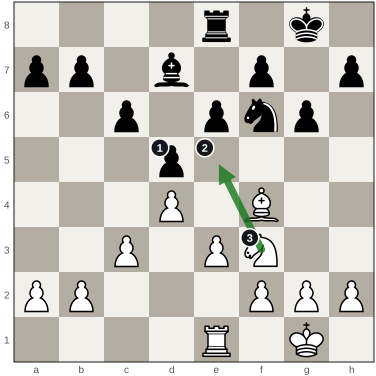 Space and weak squaresCramped positions, squares no pawn can guard, and why your pawns decide which bishop to keep.Intermediate · 11 min · Pro
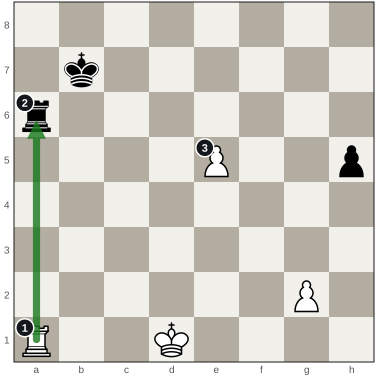 When to trade piecesTrade when it wins, when you are cramped, or to remove a defender, and look at the ending first.Intermediate · 12 min · Pro
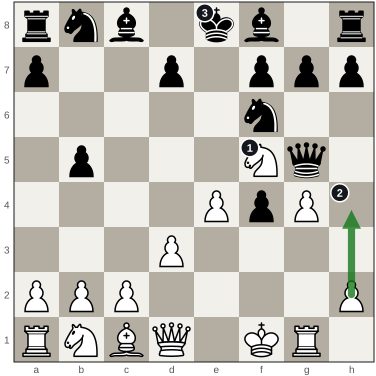 The initiativeKeep making threats, and give material when it keeps the other side busy.Intermediate · 12 min · Pro
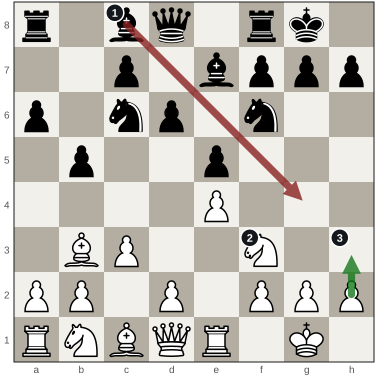 ProphylaxisAsk what your opponent wants to do, and stop it before it happens.Advanced · 12 min · Pro
Famous chess games
Famous games, move by move.
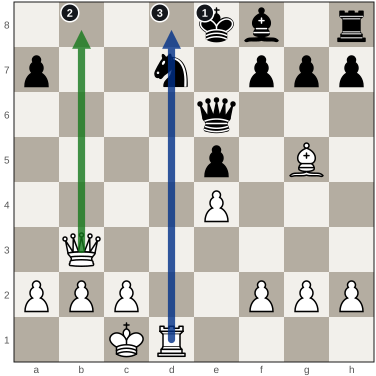 The Opera GameMorphy’s famous win, played at the opera house in Paris in 1858.Beginner · 10 min · Free
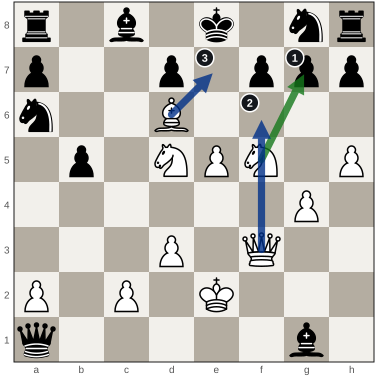 The Immortal GameAnderssen gives up almost everything and mates with three minor pieces.Beginner · 10 min · Free
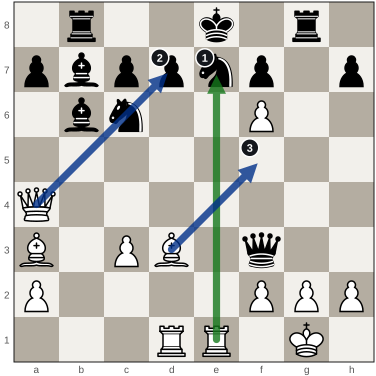 The Evergreen GameAnderssen’s second masterpiece: a quiet rook move, then three sacrifices.Intermediate · 10 min · Pro
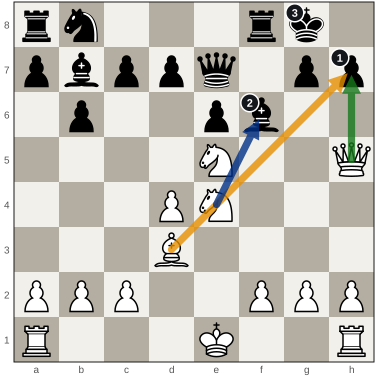 Edward Lasker’s queen sacrificeEdward Lasker gives up his queen, and the black king is hunted across the whole board.Intermediate · 8 min · Pro
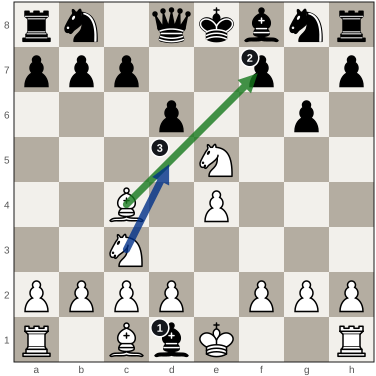 Short games that end in mateThe Légal mate, a Caro-Kann trap and Réti’s famous queen sacrifice: three quick finishes.Beginner · 9 min · Pro
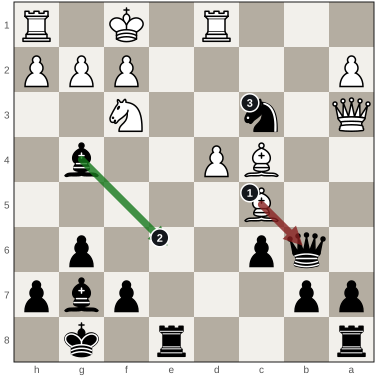 The Game of the CenturyThirteen-year-old Fischer gives up his queen for a decisive attack.Advanced · 12 min · Pro
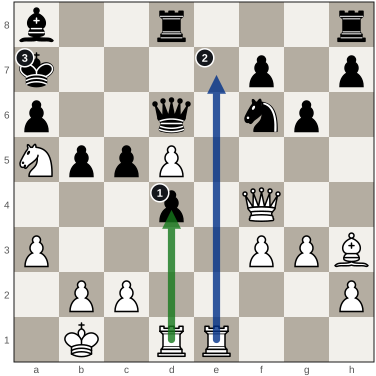 Kasparov’s ImmortalTwo rooks are given up in a king hunt that runs the length of the board.Advanced · 12 min · Pro
Good chess habits
Habits that prevent the mistakes that lose most games.
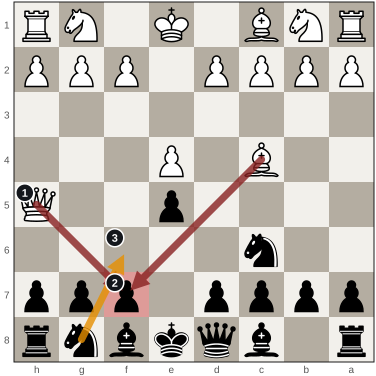 The blunder checkThree questions before every move catch most of your blunders.Beginner · 7 min · Free
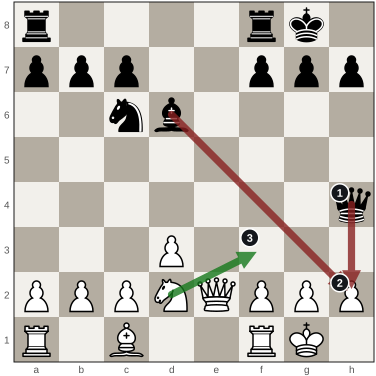 What is my opponent threatening?After every move, ask what it attacks and what it prepares.Beginner · 7 min · Free
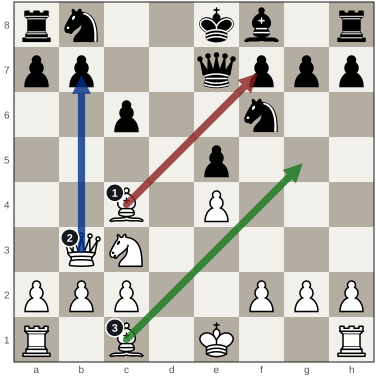 Candidate movesList your checks, captures and threats, then choose, and do not play the first idea.Intermediate · 8 min · Pro
 Using your time wellSpend your time on the moves that decide the game, and no more.Beginner · 6 min · Pro
 Learn from your gamesReviewing a game teaches you more than playing another one.Beginner · 7 min · Pro