Chess lessons › Chess openings
Opening principles
Fight for the centre, bring out your pieces and castle: three aims for your first moves.
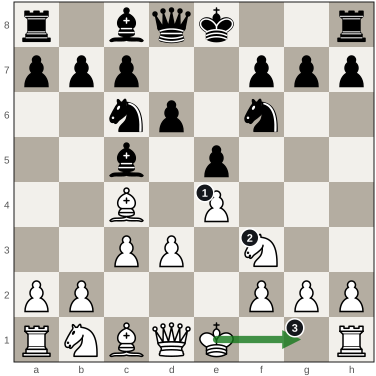
The idea
Fight for the centre, develop your pieces, and castle.
- The pawn on e4 takes a share of the centre.
- The knight and bishop are off the back rank: they are developed.
- Now castle: the king goes to safety and the rook leaves the corner.
In a game: In your first moves, ask if each move helps the centre, develops a piece or castles.
The lesson
The first moves of a game are called the opening. You do not need long lines by heart to play it well. Three aims cover almost everything.
1. Fight for the centre. The four middle squares, d4, e4, d5 and e5, are marked. Pieces that stand on them or aim at them reach both sides of the board quickly.
2. Develop your pieces. Bring the knights and bishops off the back rank to squares where they do something.
3. Castle. The king goes to safety and a rook comes into play.

Here is a model. Both sides follow the three aims, and nobody does anything fancy. Step through the moves and read what each one does.

- 1. e4 White takes a centre square. The pawn also opens lines for the queen and the bishop on f1.
- 1... e5 Black does the same.
- 2. Nf3 A knight comes out, and it attacks the pawn on e5.
- 2... Nc6 Black develops a knight too, and it defends that pawn.
- 3. Bc4 The bishop comes out to a diagonal that is open as far as f7.
- 3... Bc5 4. c3 A pawn move to prepare d4, which would put a second pawn in the centre.
- 4... Nf6 5. d3 A quiet pawn move that supports e4 and gives the bishop on c1 room to move.
- 5... d6 6. O-O White castles. The king is safe on g1 and the rook has left the corner.
- 6... O-O Black castles as well. Both sides have a safe king, developed pieces and a share of the centre.
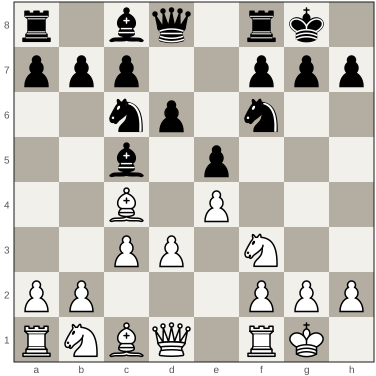
Find the move
Black to move. White’s knight attacks your pawn on e5. Defend it by developing a knight.
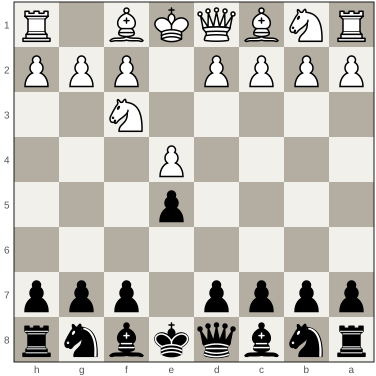
A hint
Your queen’s knight can go to c6, where it guards e5.
Show the answer
2... Nc6
Nc6 defends the pawn and brings a knight into the game with one move. It is the favourite here: players rated 1200 to 1599 on Lichess chose it in 65% of the games that reached this position.
Find the move
White to move. Your king is still in the middle, and the squares between it and the h1 rook are empty. Castle.
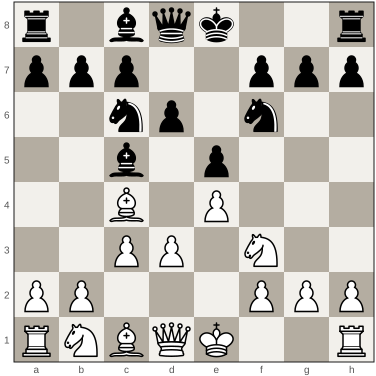
A hint
Move the king two squares towards the rook.
Show the answer
6. O-O
Castling does two jobs in one move: the king goes to g1 behind its pawns, and the rook comes out of the corner towards the centre.
A question
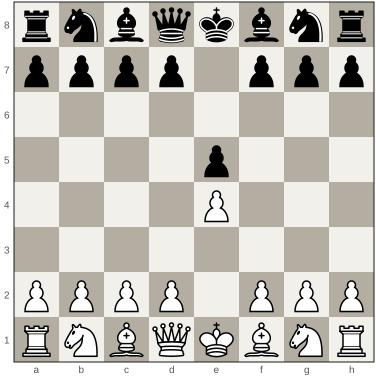
White’s second move. Which of these three moves goes against the opening aims?
Show the answer
Qh5.
Right. The queen comes out before any knight or bishop has moved. Cheaper pieces can chase her, and every move she spends is a move your other pieces do not get. The next step shows it.
Here is that queen move played out. Black does not need a trick, only the aims.
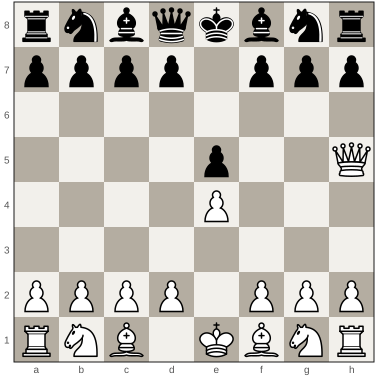
- 2... Nc6 A knight comes out, and it defends e5.
- 3. Bc4 White develops a bishop. Now the bishop and the queen both aim at f7.
- 3... g6 Black’s pawn attacks the queen, and it blocks her diagonal to f7.
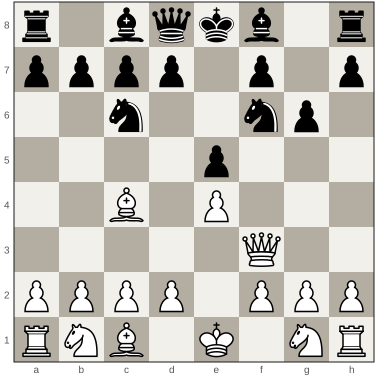
- 4. Qf3 The queen has now moved twice, and most of White’s army is still at home.
- 4... Nf6 Black has two knights out, and the pawn move g6 has made room for the bishop on f8. The engine prefers Black here.
A question
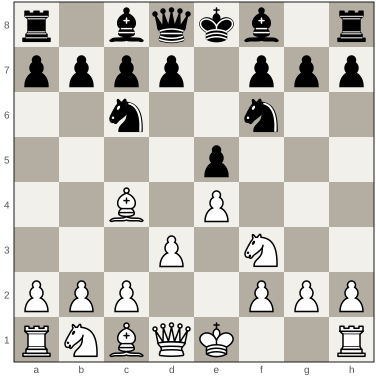
Black to move. Both knights are out. Which move follows the aims best?
Show the answer
Bc5.
Right. A bishop that has not moved comes out to an open diagonal. It is also one of the moves the engine likes here.
Find the move
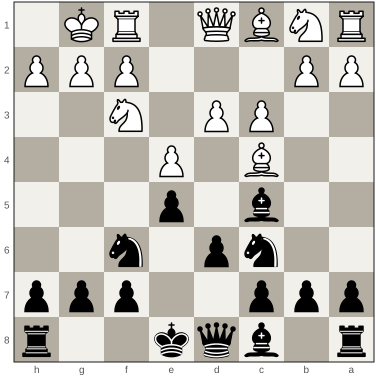
Black to move. White has castled. Do the same: your king is in the middle and the way to the h8 rook is clear.
A hint
Move the king two squares towards the rook.
Show the answer
6... O-O
Both kings are safe now, and the rest of the game is about what each side does with its pieces. That is where the other opening lessons begin.