Chess lessons
Chess tactics
Forks, pins and the other tricks that win material. 17 lessons, 3 of them free.

Beginner · 9 min · Free
One move attacks two pieces, and only one can be saved.
- The knight lands where it attacks two pieces.
- One of them is the king, so it must move.
- Then the knight takes the rook.
In a game: Look for a square where one of your pieces would attack two loose pieces at once.
Read the lesson
Beginner · 9 min · Free
A piece that cannot move without exposing a bigger one behind it.
- The bishop attacks the knight.
- The king stands behind it on the same line.
- So the knight cannot move: it is pinned.
In a game: Look for two enemy pieces on one line, the more valuable one behind.
Read the lesson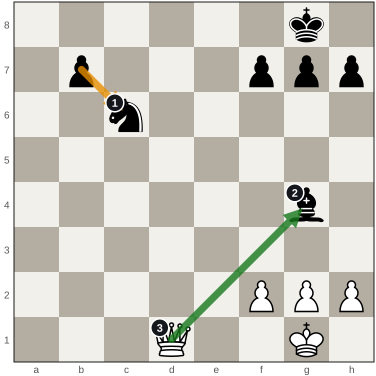
Beginner · 8 min · Free
A piece that nothing defends can often be taken for free.
- The knight is defended by a pawn.
- Nothing defends the bishop: it is loose.
- So the queen takes it, and nothing can take her back.
In a game: Look for pieces that nothing defends, and count attackers and defenders before you take.
Read the lesson
Intermediate · 8 min · Pro
Attack a big piece, and take the one behind it when it moves.
- The rook gives check along the back rank.
- The king has to step off the rank.
- Then White takes the rook that stood behind the king.
In a game: Look for a king or queen with another piece behind it on the same line.
Read the lesson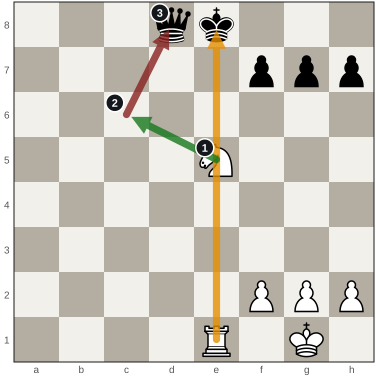
Intermediate · 9 min · Pro
Move one piece out of the way, and the piece behind it attacks.
- The knight stands between its rook and the black king.
- The knight jumps away, and the rook behind it gives check.
- The knight also attacks the queen, so she is lost.
In a game: Look for your piece standing in front of your rook, bishop or queen, aimed at a target.
Read the lesson
Intermediate · 8 min · Pro
Two pieces give check at once, so only the king can move.
- The knight gives check.
- The rook gives check at the same time.
- Nothing can block or take both, so the king must move.
In a game: Look for a discovered check where the piece that moves gives check too.
Read the lesson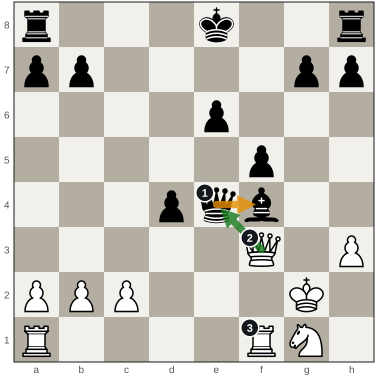
Intermediate · 8 min · Pro
Take the piece that guards your target, and the target falls.
- The black queen is the only defender of the bishop.
- White takes that queen, and Black takes back with a pawn.
- Now nothing defends the bishop, and the rook takes it.
In a game: When a piece has only one defender, look for a way to take that defender.
Read the lesson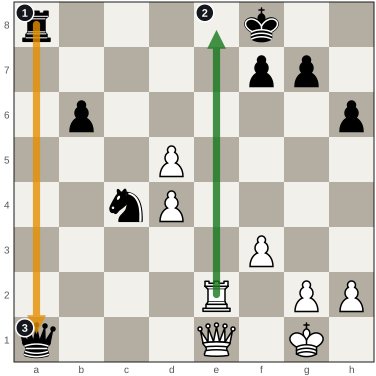
Intermediate · 9 min · Pro
Pull a defender away from its job, or drag a piece onto a bad square.
- The rook is the only defender of the black queen.
- White’s rook gives check, and the black rook must take it.
- Now nothing defends the black queen, and White takes her.
In a game: When one piece guards something important, look for a check or capture that pulls it away.
Read the lesson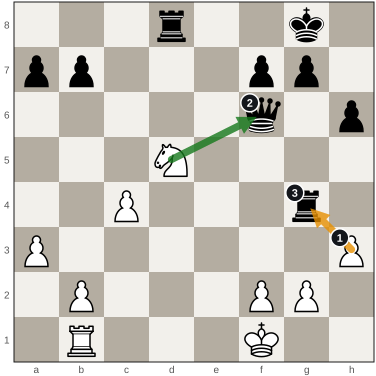
Intermediate · 8 min · Pro
Before the move everyone expects, slip in a check or a big capture.
- The pawn could take the rook right away.
- But first the knight takes the queen, with check.
- Black has to answer the check, and then the pawn takes the rook.
In a game: Before the obvious move, such as taking back, look for a check or a bigger capture.
Read the lesson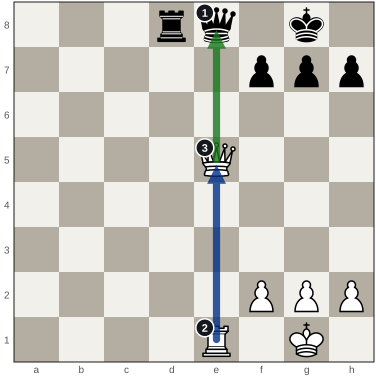
Intermediate · 8 min · Pro
A piece attacks or defends through another piece on its line.
- The black queen has one defender, the rook beside her.
- White’s rook sees the same square, right through its own queen.
- So the queen takes, Black takes back, and White’s rook mates.
In a game: When you count attackers and defenders, count the pieces lined up behind them too.
Read the lesson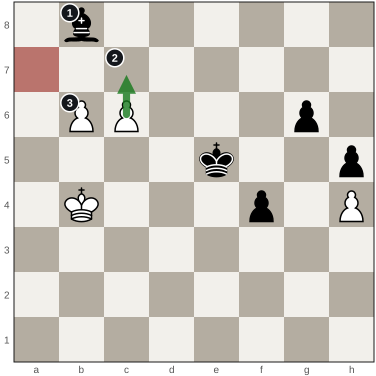
Intermediate · 8 min · Pro
A piece that is attacked and has no safe square to go to is lost.
- The bishop stands on the edge, with very little room.
- The pawn steps up, attacks it, and blocks its way out.
- This pawn guards both squares the bishop could go to, so the bishop is trapped.
In a game: Look for enemy pieces on the edge with few squares, and take those squares away.
Read the lesson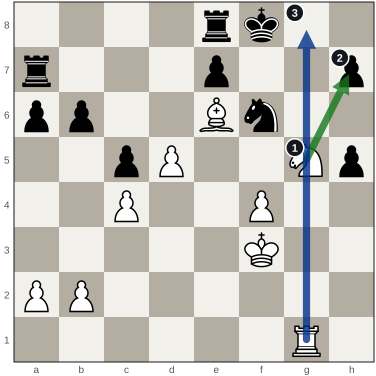
Intermediate · 9 min · Pro
Clear the way for your own piece, or cut a line between enemy pieces.
- The knight stands in the way of its own rook.
- It takes a pawn with check, and Black must take the knight.
- Now the file is open, and the rook gives mate.
In a game: When your own piece blocks your rook or bishop, look for a check that moves it away.
Read the lesson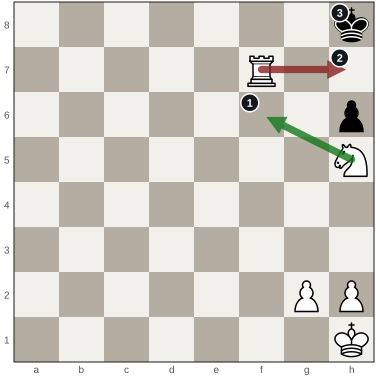
Advanced · 8 min · Pro
A move with no check or capture, but with a threat that cannot be met.
- The knight moves here, with no check and no capture.
- The knight now guards this square, so the rook threatens mate on it.
- Black cannot stop it, and the rook mates next move.
In a game: When no check or capture works, look for a quiet move with a threat that cannot be stopped.
Read the lesson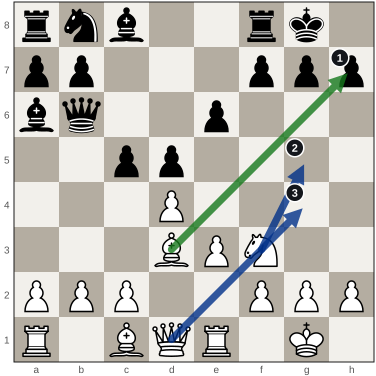
Intermediate · 10 min · Pro
Give up a piece to open the enemy king, when the attack is sound.
- The bishop gives itself up here, with check.
- If the king takes it, the knight jumps in with check.
- The queen joins the attack, and the king stands in the open.
In a game: Before you give up a piece near the king, count your attackers against its defenders.
Read the lesson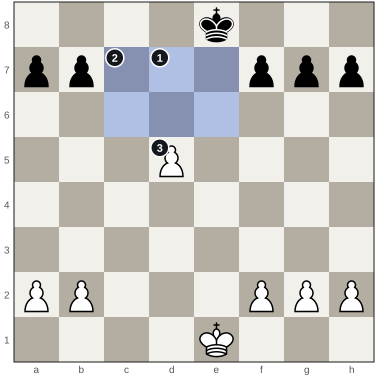
Intermediate · 10 min · Pro
A pawn that no enemy pawn can stop, on its way to becoming a queen.
- No black pawn stands in front of the white pawn.
- No black pawn stands on the files beside it either.
- So it is passed: only pieces can stop it becoming a queen.
In a game: Look for a pawn that no enemy pawn can block or take, and push it.
Read the lesson
Intermediate · 9 min · Pro
Every move makes things worse, but you still have to move.
- The kings face each other with one square between: the opposition.
- Black has to move, and every king move gives way.
- White’s king gets past, and the pawn goes on to become a queen.
In a game: In king and pawn endings, face the enemy king one square apart, with your opponent to move.
Read the lesson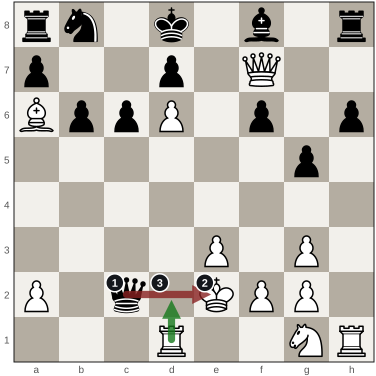
Intermediate · 9 min · Pro
First see what your opponent threatens, then find the best answer.
- First see the threat: the queen gives check.
- Look at every answer: move the king, block, or take the checking piece.
- The rook blocks: the king protects it, and it attacks the queen.
In a game: After each move your opponent makes, ask what it threatens before you plan your own.
Read the lesson