Chess lessons
Good chess habits
Habits that prevent the mistakes that lose most games. 5 lessons, 2 of them free.
Beginner · 7 min · Free
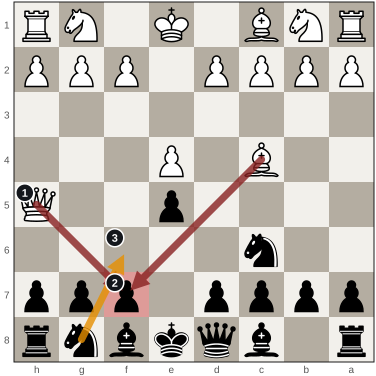
Three quick questions before every move catch most of your blunders.
- Ask what White’s last move did: now the queen and bishop work together.
- Both of them attack this pawn, and only the king defends it.
- A knight here attacks the queen, but she takes the pawn, and it is mate.
In a game: Before you move, ask what the last move attacked and what yours leaves undefended.
Read the lesson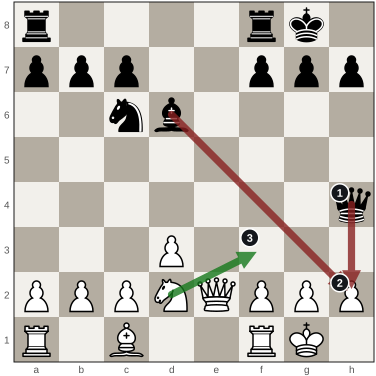
Beginner · 7 min · Free
After every enemy move, ask what it attacks and what it prepares.
- Black’s queen and bishop both aim at the pawn next to your king.
- Only the king guards it, so the queen threatens to take it with mate.
- A knight here guards that pawn and attacks the queen as well.
In a game: After each enemy move, ask what it attacks, even when it is not a check or a capture.
Read the lesson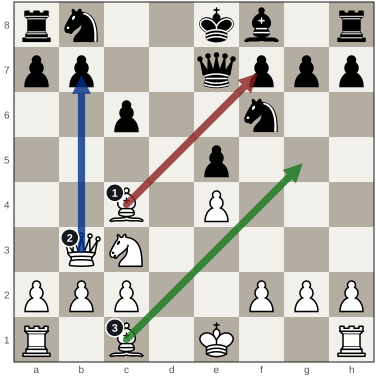
Intermediate · 8 min · Pro
List a few moves, forcing ones first, then compare them and choose.
- Start with checks: this bishop can take a pawn with check.
- Then captures: the queen can take a pawn as well.
- Then compare: bringing this bishop into play beats both of them.
In a game: When no move is obvious, do not play the first idea: list a few and compare.
Read the lesson
Beginner · 6 min · Pro
Spend your time on the moves that decide the game, and no more.
- Play the moves you know quickly, such as your opening moves.
- Think longest when the position opens or your king is in danger.
- Always keep a few minutes for the end of the game.
In a game: If you are often short of time at the end, spend less of it on easy moves.
Read the lesson
Beginner · 7 min · Pro
Going over your games teaches you more than playing more of them.
- Soon after the game, find the move where it turned.
- Ask what you were thinking when you played it.
- Work out what question would have saved you, and practise it.
In a game: After a loss, find the move that lost it and ask why you played it.
Read the lesson