Chess lessons › Good chess habits
The blunder check
Three questions before every move catch most of your blunders.
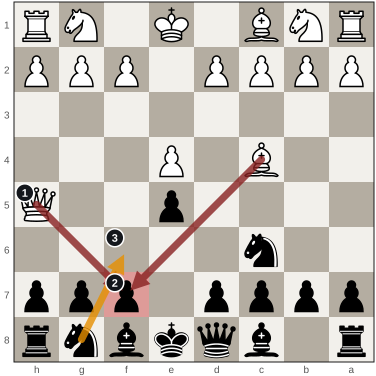
The idea
Three quick questions before every move catch most of your blunders.
- Ask what White’s last move did: now the queen and bishop work together.
- Both of them attack this pawn, and only the king defends it.
- A knight here attacks the queen, but she takes the pawn, and it is mate.
In a game: Before you move, ask what the last move attacked and what yours leaves undefended.
The lesson
Many games between club players are decided by a blunder, not by a brilliant plan. The cure is a habit. Before every move, ask three questions: what did my opponent’s last move do? What does my move leave undefended? Is there a check, a capture or a threat that is better?
Here Black is about to play 3...Nf6, which attacks the queen. It looks natural. Start with the first question: White’s queen and bishop both attack the pawn on f7, and only the king defends it.
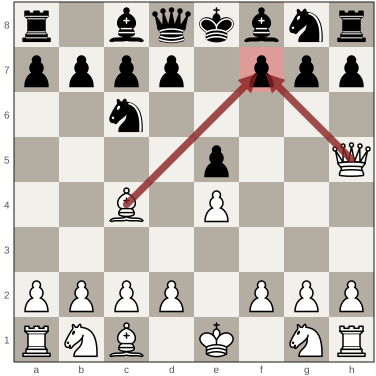
A question
Black asked no questions and played 3...Nf6, attacking your queen. What do you play?
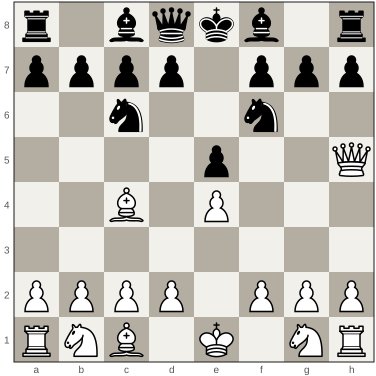
Show the answer
Qxf7, checkmate.
Right. The queen takes with check, the bishop protects her, and the king has no square. One question, “what is attacked?”, would have saved Black.
A question
Which habit saves the most games?
Show the answer
Look at what the last move attacked, and at what your move leaves behind.
Right. Check what your opponent is attacking before you move, and check what you leave undefended after you move.
Find the move
Your opponent’s last move left a piece undefended. Take it.
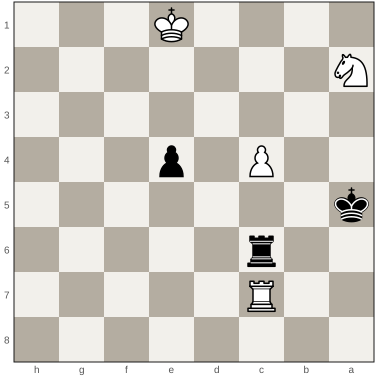
A hint
Which piece can your opponent not protect?
Show the answer
59... Rxc7 60. Nc3 Rxc4
Rxc7 wins a piece. It was attacked, and nothing protected it.
Find the move
Your opponent’s last move left a piece undefended. Take it.
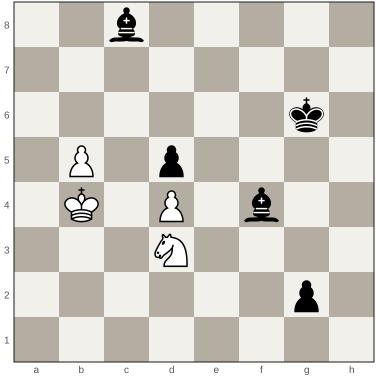
A hint
Which piece can your opponent not protect?
Show the answer
53. Nxf4+ Kf5 54. Nxg2
Nxf4+ wins a piece. It was attacked, and nothing protected it.
Find the move
Your opponent’s last move left a piece undefended. Take it.
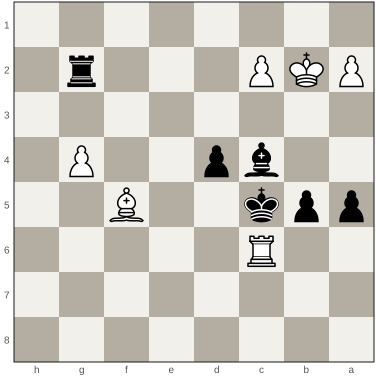
A hint
Which piece can your opponent not protect?
Show the answer
52... Kxc6 53. Be4+ Bd5
Kxc6 wins a piece. It was attacked, and nothing protected it.
Practise
Now some on your own. Before every move, ask what is undefended.
In the lesson, 5 rated puzzles on this theme come from the puzzle bank, chosen near your rating.
In numbers
In the puzzle bank
1,185 puzzles in GreyChess’s bank practise it. Half of them are rated between 648 and 2,006.
The piece that makes the first move of the answer: queen 41%, rook 24%, king 11%, knight 10%, bishop 9%, pawn 5%, in puzzles from the Lichess puzzle database.
Blunders in real games
| Rating | Value |
|---|---|
| Under 800 | 6.6 |
| 800 to 1199 | 4.2 |
| 1200 to 1599 | 2.8 |
| 1600 to 1999 | 2 |
| 2000 and up | 1.3 |