Chess lessons › Good chess habits
Candidate moves
List your checks, captures and threats, then choose, and do not play the first idea.
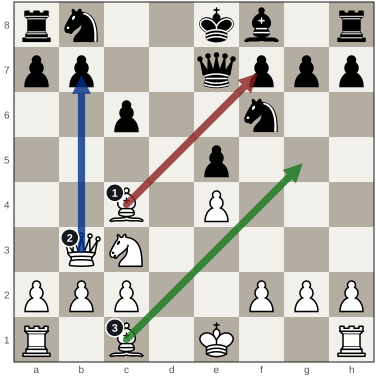
The idea
List a few moves, forcing ones first, then compare them and choose.
- Start with checks: this bishop can take a pawn with check.
- Then captures: the queen can take a pawn as well.
- Then compare: bringing this bishop into play beats both of them.
In a game: When no move is obvious, do not play the first idea: list a few and compare.
How the lesson begins
When there is no obvious move, do not play the first idea that comes to you. Make a short list of candidate moves, and start with the forcing ones: checks first, then captures, then threats. Then compare them and choose.
Here White has a check, Bxf7+, and a capture, Qxb7. There are also quiet moves that bring a piece into the game. Look at each one before you decide.
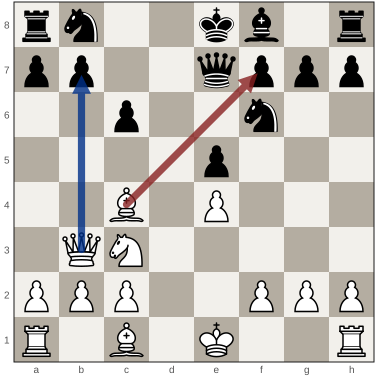
Find the move
White to move. Make your list of candidates and play the move you think is best. A hint: bringing a piece into the game can be better than grabbing a pawn.
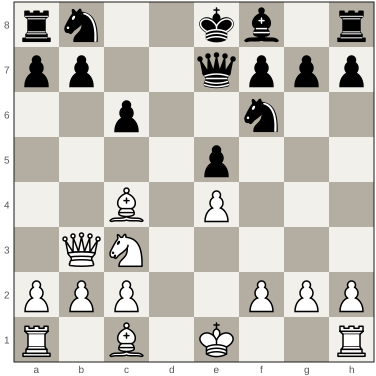
A hint
Look for a move that develops a piece with a purpose.
Show the answer
9. Bg5
Both Bg5 and Be3 develop a piece and keep the pressure on, and the engine rates them as the two best moves here. This position is from the Opera Game, and Morphy played Bg5.