Chess lessons
Chess strategy
Plans for the middlegame: what to aim for when nothing is hanging. 12 lessons, 2 of them free.
Beginner · 7 min · Free
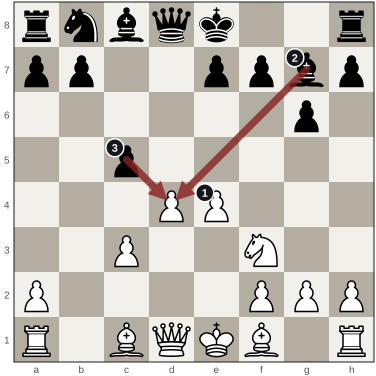
Control the middle squares, with pawns or with pieces aimed at them.
- White holds the centre with pawns: the classical way.
- Black’s bishop attacks d4 from afar: the hypermodern way.
- The pawn on c5 joins in, and White must keep d4 guarded.
In a game: In the opening, ask who controls d4, e4, d5 and e5, with pawns and with pieces.
Read the lesson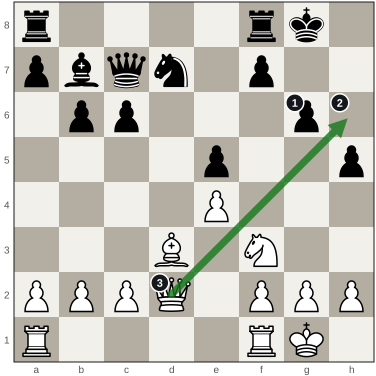
Beginner · 11 min · Free
Castle early, and keep the pawn shield in front of your king.
- Black has pushed the shield pawns to g6 and h5.
- Now no black pawn guards h6, close to the king.
- White’s queen goes there at once, and White is clearly better.
In a game: Before you push a pawn in front of your castled king, ask which squares it stops guarding.
Read the lesson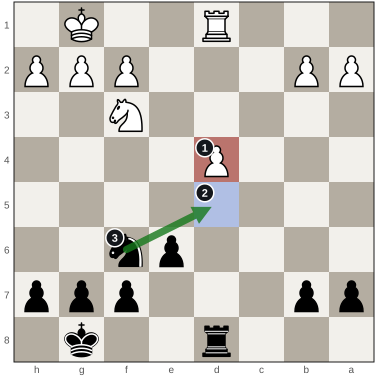
Beginner · 12 min · Pro
Pawns cannot move back, so the way they stand decides the plans.
- White’s pawn on d4 is isolated: no white pawn stands on a file beside it.
- Only pieces can defend it, and d5 in front of it is a fine post for Black.
- Black’s knight goes to d5, blocks the pawn, and no pawn can chase it.
In a game: Look for pawns with no friendly pawn beside them, and the squares in front of them.
Read the lesson
Intermediate · 12 min · Pro
A pawn no enemy pawn can block or capture: only pieces can stop it.
- The a-pawn is an outside passed pawn, far from all the others.
- Black’s king has to go over and stop it.
- Meanwhile White’s king goes after the black pawns.
In a game: Push a passed pawn when the push is safe, and block your opponent’s with a piece.
Read the lesson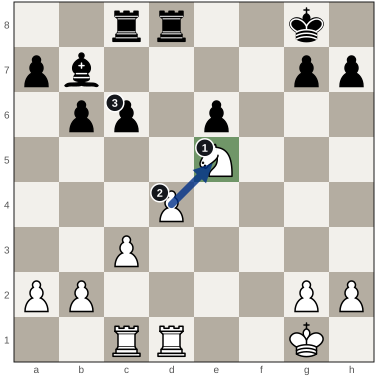
Intermediate · 10 min · Pro
A knight on a square no enemy pawn can attack is hard to drive away.
- The knight sits on e5, in Black’s half, where no black pawn can attack it.
- The pawn on d4 defends it, so it is very hard to drive away.
- Black’s plan is c5, to attack the pawn behind it.
In a game: Look for a square in the enemy half that no enemy pawn can ever attack.
Read the lesson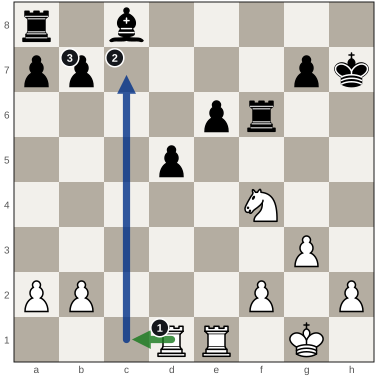
Intermediate · 10 min · Pro
Rooks belong on files with no pawns, and then on the seventh rank.
- The c-file has no pawns on it, so the rook steps across to it.
- Along the open file, it can reach the seventh rank.
- There it attacks Black’s pawns from the side.
In a game: Look for a file with no pawns, and put a rook on it before your opponent does.
Read the lesson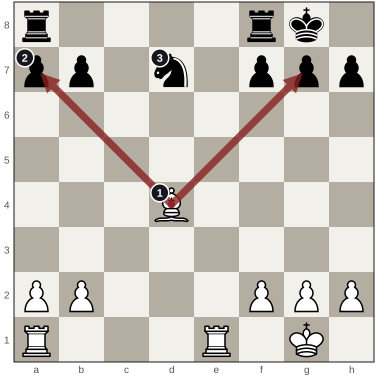
Intermediate · 10 min · Pro
Bishops like open positions, and knights like closed ones.
- The bishop on d4 reaches both wings at once.
- It attacks the pawn on a7 and the pawn on g7, far apart.
- A knight needs several moves to get from one wing to the other.
In a game: Pawns on both wings and open lines favour the bishop; a locked centre favours the knight.
Read the lesson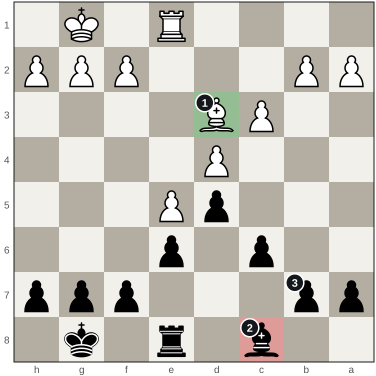
Intermediate · 10 min · Pro
A bishop is only as good as the diagonals its own pawns leave open.
- White’s centre pawns are on dark squares, so the bishop on d3 is good.
- Black’s pawns on light squares shut in the bishop on c8: it is bad.
- Free a bad bishop by moving a pawn that blocks it, or trade it off.
In a game: If most of your pawns stand on your bishop’s colour, it is bad: move them or trade it.
Read the lesson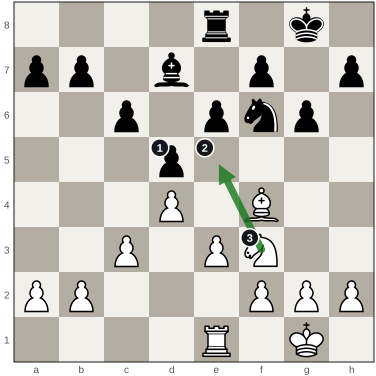
Intermediate · 11 min · Pro
More space cramps the enemy; squares no pawn can guard are weak.
- Black’s centre pawns all stand on light squares.
- Black’s dark-squared bishop is gone, so nothing guards e5.
- White’s knight jumps there and attacks the bishop and several pawns.
In a game: If your pawns stand on light squares, keep your dark-squared bishop, and the other way round.
Read the lesson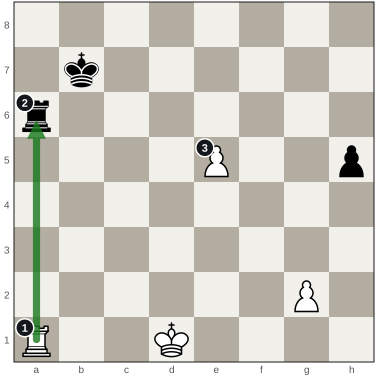
Intermediate · 12 min · Pro
Trade when ahead, when cramped, or to remove a defender.
- White is a pawn up, but with the rooks on it is hard to win.
- So White trades the rooks, and Black’s king takes back.
- In the pawn ending that is left, the extra pawn wins.
In a game: Before any trade, look at the ending it leads to: some win, and some only draw.
Read the lesson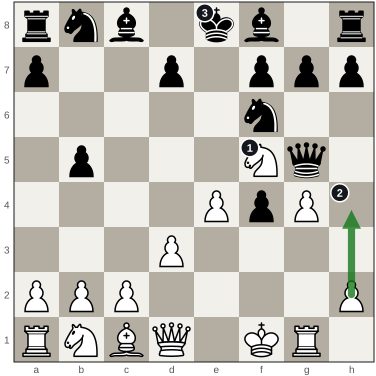
Intermediate · 12 min · Pro
Keep making threats, and give material if it keeps your opponent busy.
- White is a bishop down, but White is the one making threats.
- On h4 the pawn attacks the queen, so Black must spend a move on her.
- A threat every move leaves Black no time to get organised.
In a game: When you attack, look for moves that make a new threat, so your opponent never gets a rest.
Read the lesson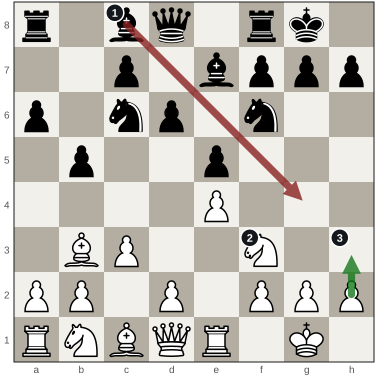
Advanced · 12 min · Pro
Ask what your opponent wants to do, and stop it before it happens.
- Ask what Black wants: this bishop would like to go to g4.
- From g4 it would pin the knight on f3 to the queen.
- So White plays h3 first, and the bishop cannot go there safely.
In a game: Before you move, imagine it is your opponent’s turn: what would they play?
Read the lesson