Chess lessons › Chess strategy
Prophylaxis
Ask what your opponent wants to do, and stop it before it happens.
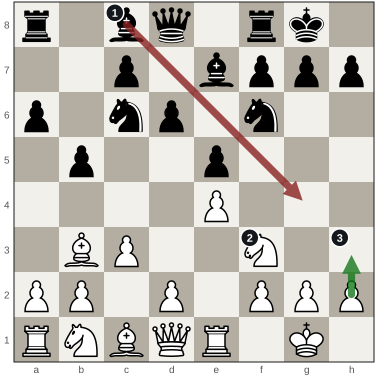
The idea
Ask what your opponent wants to do, and stop it before it happens.
- Ask what Black wants: this bishop would like to go to g4.
- From g4 it would pin the knight on f3 to the queen.
- So White plays h3 first, and the bishop cannot go there safely.
In a game: Before you move, imagine it is your opponent’s turn: what would they play?
How the lesson begins
Prophylaxis means stopping your opponent’s plan before it happens. Before you pick a move, ask: what does my opponent want to do? A good test is to imagine that you could pass, and that it were your opponent’s move. What would they play?
Look at this ending. Black’s pawn on f3 has gone a long way, and White’s king is far away.
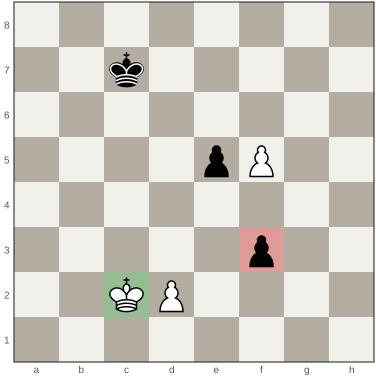
Find the move
Imagine White could pass, and it were Black’s move. Find Black’s winning move.
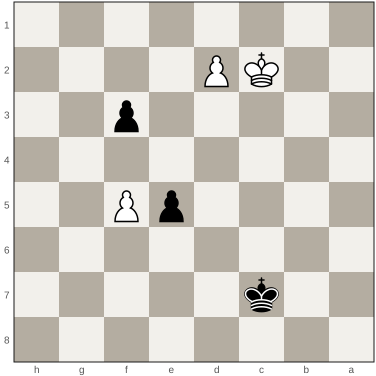
A hint
Push the far-advanced pawn.
Show the answer
1... f2
...f2, and the pawn cannot be stopped: White’s king is too far away, and the tablebase, the list of perfect results for endings, says Black wins. So this is what White has to prevent.
In numbers
In the puzzle bank
2,157 puzzles in GreyChess’s bank practise it. Half of them are rated between 1,750 and 2,712.
The piece that makes the first move of the answer: king 31%, pawn 28%, rook 15%, queen 13%, bishop 8%, knight 6%, in puzzles from the Lichess puzzle database.