Chess lessons › Chess strategy
King safety
Castle early, keep the pawns and files near your king safe, and know when waiting is fine.
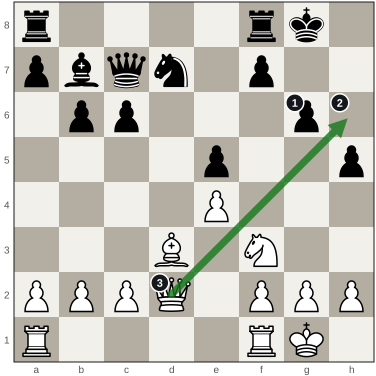
The idea
Castle early, and keep the pawn shield in front of your king.
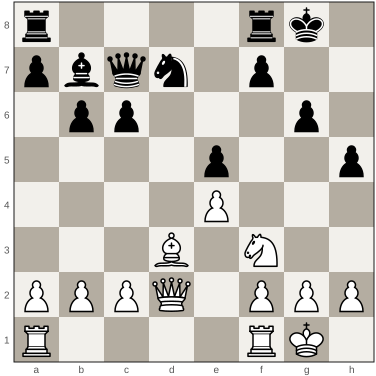
- Black has pushed the shield pawns to g6 and h5.
- Now no black pawn guards h6, close to the king.
- White’s queen goes there at once, and White is clearly better.
In a game: Before you push a pawn in front of your castled king, ask which squares it stops guarding.
The lesson
In the opening, a king in the middle of the board is in danger: the centre can open, and enemy pieces can come at it from every side. The fix is to castle, which puts the king in the corner and brings a rook towards the middle.
A castled king is guarded by the pawns in front of it, its pawn shield. Here both kings have castled, and each stands behind three pawns.
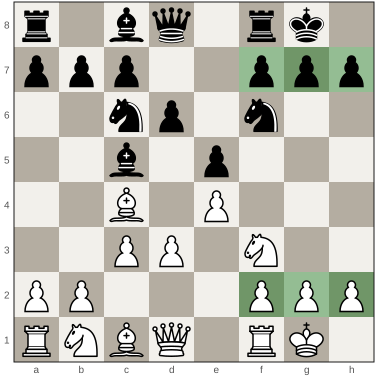
Find the move
It is White’s move. The king is still on e1, and the centre could open at any time. Make it safe.
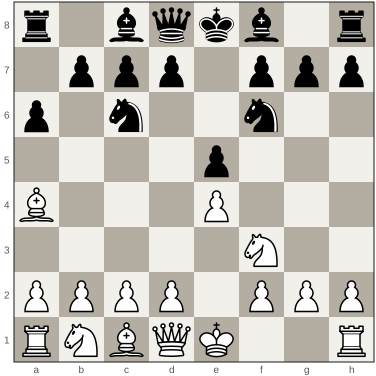
A hint
Move the king two squares towards the rook on h1.
Show the answer
5. O-O
Castling puts the king on g1 behind the pawns on f2, g2 and h2, and the rook jumps to f1, ready for the centre. Two jobs in one move, and it is also the first choice of the engine, the computer program that analyses positions.
Now see what the shield does. Black’s pawn on g7 guards f6 and h6, so White’s queen cannot go to either square: a pawn would simply take it.
The engine rates this position as equal, and Black’s king is safe.
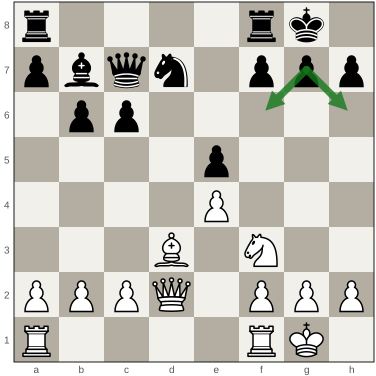
Find the move
The pieces are exactly the same, but Black has pushed two shield pawns: they stand on g6 and h5, and no pawn guards f6 or h6 now. White to move. Where does the queen go?
A hint
Look at the dark squares in front of Black’s king.
Show the answer
1. Qh6
Qh6 lands on a dark square that no black pawn guards, close to the king. The only change from the last position is where two pawns stand, and now the engine rates White as clearly better. Keep your shield pawns at home unless you have a clear reason to move them.
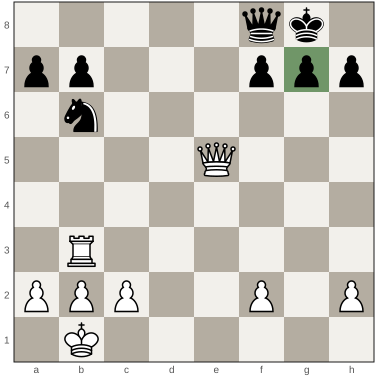
A pawn that leaves the shield also opens a file. Here Black’s king is castled, with its pawn on g7 in front of it. White’s rook on b3 can swing to g3, but the pawn on g7 shuts the file in front of the king, so there is no check.
There is no forced checkmate in two moves here.
Find the move
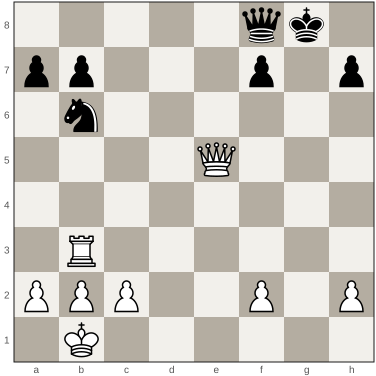
The same position, but the pawn on g7 is gone, so the g-file is open in front of the king. White to move. Find the checkmate in two.
A hint
Bring the rook to the open file, with check.
Show the answer
1. Rg3+ Qg7 2. Qe8#
Rg3+ puts a rook on the open file with check. The queen on f8 has to block on g7, and Qxg7# is checkmate: the rook protects the queen, and the king has no square. With the pawn on g7 the file is shut, and White has no quick mate.
Find the move
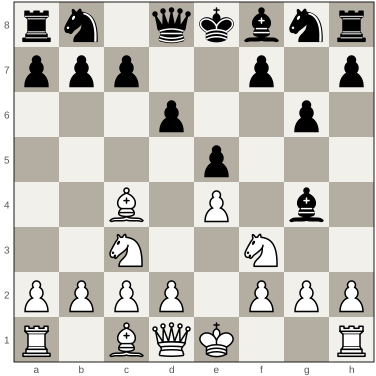
Black has left the king on e8 and has not castled. Black’s bishop pins your knight on f3, but you have a trick. Find the knight move, then finish the line.
A hint
Capture a pawn with the knight that is pinned.
Show the answer
5. Nxe5 dxe5 6. Qxg4
Nxe5! attacks the bishop and the f7 pawn. If Black takes the knight with ...dxe5, then Qxg4 takes the bishop: White has won a pawn and the engine rates the position as clearly better. If Black takes your queen instead, the next step shows what happens.
Black took your queen with the bishop. You have lost nine points, but Black’s king is still on e8. Watch the finish.
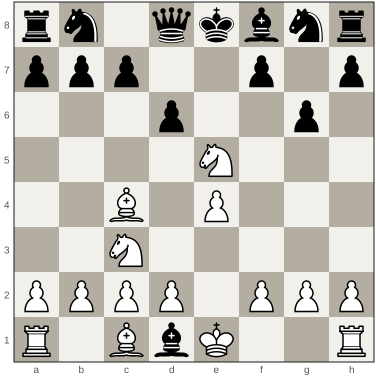
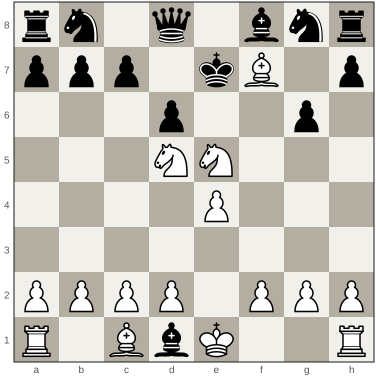
- 6. Bxf7+ The bishop gives check, and the king can only go to e7.
- 6... Ke7 7. Nd5# Checkmate. The knight on e5 guards d7 and f7, the bishop covers e6 and e8, the knight on d5 covers f6, and Black’s own queen, bishop and pawn fill d8, f8 and d6. A king that never castled has no shelter.
A king in the centre is not always in danger. This is the Berlin Wall, a well-known line of the Ruy Lopez. The queens come off at once, and Black’s king can no longer castle.
Watch what happens.
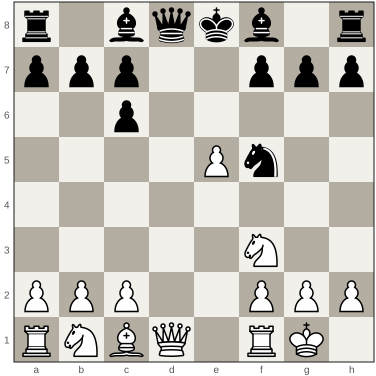
- 8. Qxd8+ White takes the queen with check.
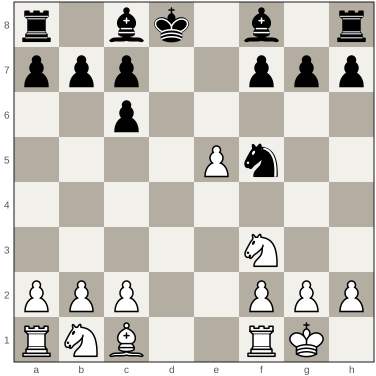
- 8... Kxd8 Black takes back. The king has lost the right to castle, and the queens are gone.
A question
Black’s king cannot castle any more and stands in the middle of the board. Is it in danger?
Show the answer
No, with the queens off there is little to attack it.
Right. The engine rates this position as level. In an endgame the king is even a useful fighting piece.
Practise
Now look for exposed kings on your own.
In the lesson, 5 rated puzzles on this theme come from the puzzle bank, chosen near your rating.
In numbers
In the puzzle bank
2,154 puzzles in GreyChess’s bank practise it. Half of them are rated between 1,543 and 2,422.
The piece that makes the first move of the answer: rook 36%, queen 29%, pawn 12%, bishop 10%, knight 9%, king 5%, in puzzles from the Lichess puzzle database.