Chess lessons › Chess strategy
Pawn structure
Isolated, doubled, backward and passed pawns: how to spot them, and what to do about them.
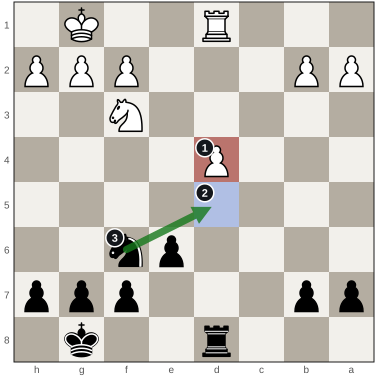
The idea
Pawns cannot move back, so the way they stand decides the plans.
- White’s pawn on d4 is isolated: no white pawn stands on a file beside it.
- Only pieces can defend it, and d5 in front of it is a fine post for Black.
- Black’s knight goes to d5, blocks the pawn, and no pawn can chase it.
In a game: Look for pawns with no friendly pawn beside them, and the squares in front of them.
How the lesson begins
Pawns cannot move backwards, so the way they stand, the pawn structure, decides the plans for a long time. Start with the isolated pawn: a pawn with no friendly pawn on either neighbouring file.
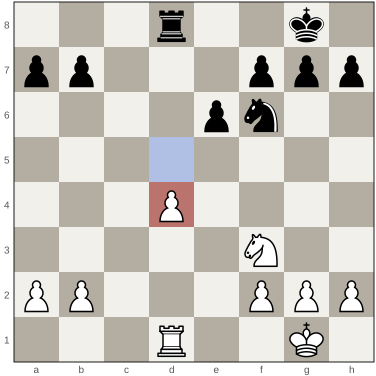
White’s pawn on d4 is isolated, because White has no pawns on the c-file or the e-file. No pawn stands beside it to defend it, so only pieces can. The square in front of it, d5, is a fine post for an enemy piece. The engine, a computer program that analyses positions, prefers Black here.
Find the move
Black to move. Put a knight on the square in front of the isolated pawn.
A hint
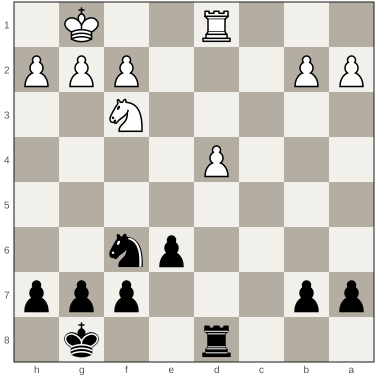
Your knight can reach the square in front of the pawn.
Show the answer
1... Nd5
The knight on d5 blockades the pawn: it cannot advance. The knight is defended by the pawn on e6, and no white pawn can come forward to attack it, because White has no c-pawn or e-pawn. That is the usual plan against an isolated pawn: blockade it, then attack it with pieces.