Chess lessons › Chess strategy
Bishop or knight?
Bishops like open positions with pawns on both wings, and knights like closed ones.
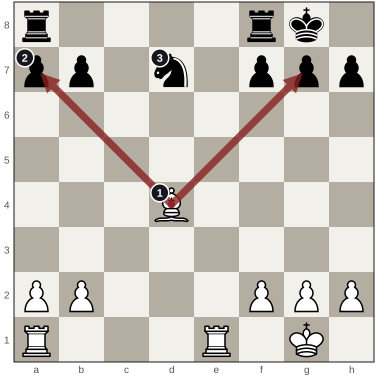
The idea
Bishops like open positions, and knights like closed ones.
- The bishop on d4 reaches both wings at once.
- It attacks the pawn on a7 and the pawn on g7, far apart.
- A knight needs several moves to get from one wing to the other.
In a game: Pawns on both wings and open lines favour the bishop; a locked centre favours the knight.
How the lesson begins
A bishop moves any distance along a diagonal, so from one square it can reach both sides of the board. This bishop on d4 attacks the pawn on a7 on one wing and the pawn on g7 on the other, at the same time. A knight would need several moves to get from one wing to the other.
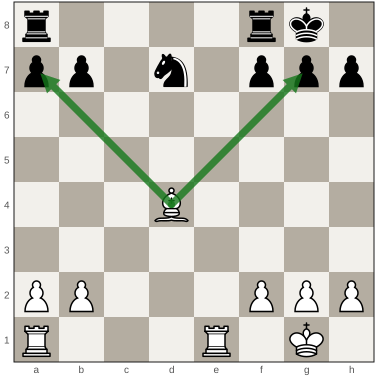
A bishop and a knight are each worth about three pawns, but they are good in different positions. A bishop moves far along diagonals, so it likes open positions with few pawns in the way, and above all when there are pawns on both wings. A knight moves in short jumps, so it likes closed positions.
Here the position is open and the pawns are on both wings. White has the bishop, and the engine prefers White.
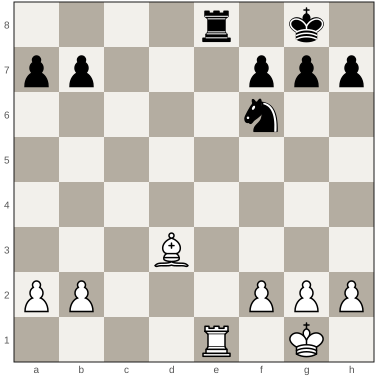
Find the move
White to move. Trade the rooks and keep the bishop against the knight.
A hint
Take the rook on e8, with check.
Show the answer
1. Rxe8+
Rxe8+ Nxe8 leaves a bishop against a knight in an open position with pawns on both wings. That is the ending White wants, and the engine’s first choice.