Chess lessons › Chess strategy
Open files
Rooks like files with no pawns, and the seventh rank is where they can do a lot of damage.
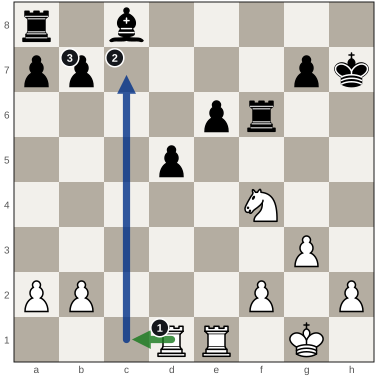
The idea
Rooks belong on files with no pawns, and then on the seventh rank.
- The c-file has no pawns on it, so the rook steps across to it.
- Along the open file, it can reach the seventh rank.
- There it attacks Black’s pawns from the side.
In a game: Look for a file with no pawns, and put a rook on it before your opponent does.
How the lesson begins
A rook is at its best on a file with no pawns on it, an open file. It can travel the whole length of the board.
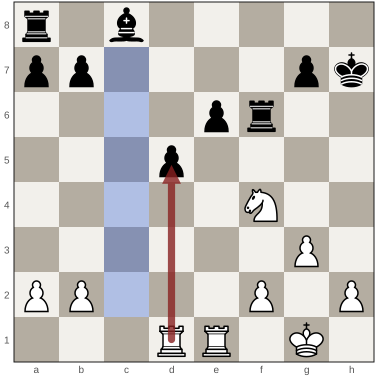
Compare White’s two rooks. The rook on d1 stands on the open d-file and can go to 11 squares. The rook on a1 is stuck behind its own pawn and can go to only 2. So a rook usually belongs on an open file.

Look for files without pawns. The c-file is open: no pawn of either side stands on it. The d-file is half-open for White: White has no pawn on it, but Black has one, on d5. A rook on a half-open file attacks the enemy pawn there, and White’s rook on d1 already attacks d5.
Find the move
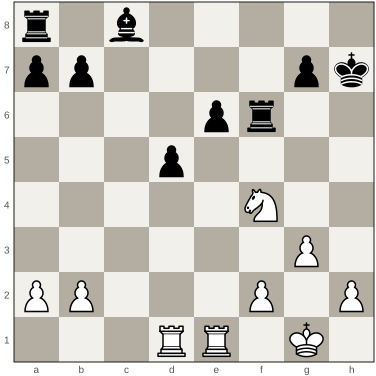
White to move. The c-file is open and nobody has a rook on it. Take it.
A hint
The rook on d1 can step onto the c-file.
Show the answer
1. Rc1
Rc1 puts a rook on the open file, facing Black’s bishop on c8, and from there it can invade the seventh rank. It is one of the engine’s best moves, and White is clearly better.