Discovered attacks
Move one piece and let the piece behind it attack, often with check.
The idea
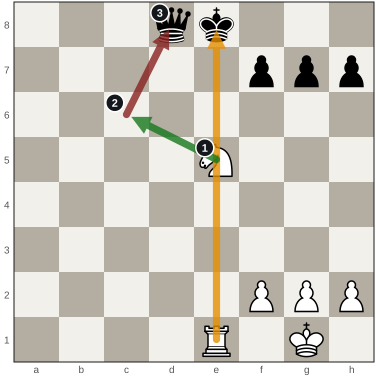
Move one piece out of the way, and the piece behind it attacks.
- The knight stands between its rook and the black king.
- The knight jumps away, and the rook behind it gives check.
- The knight also attacks the queen, so she is lost.
In a game: Look for your piece standing in front of your rook, bishop or queen, aimed at a target.
How the lesson begins
In a discovered attack, one piece moves out of the way and uncovers an attack by the piece behind it. When the uncovered attack is on the king, it is a discovered check.
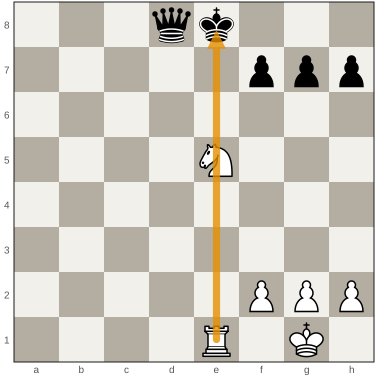
Look at the e-file. The white knight on e5 stands in front of the rook on e1, and the black king is at the other end. If the knight moves, the rook gives check. The knight can go anywhere, and Black has to deal with the check first.
Find the move
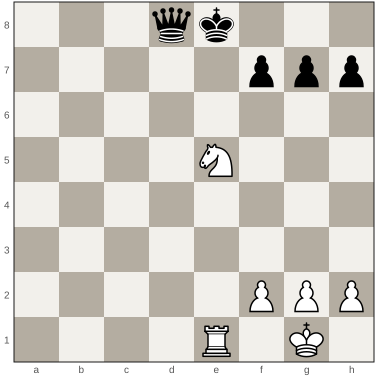
White to move. Find the discovered check that also attacks the queen.
A hint
The knight can attack the queen from c6.
Show the answer
1. Nc6+
Nc6+ moves the knight out of the way, so the rook on e1 gives check. The knight also attacks the queen on d8, and nothing can take the knight. Black has to answer the check, so the queen is lost. Nxf7+ would not do: the king takes the knight.
In numbers
In the puzzle bank
2,193 puzzles in GreyChess’s bank practise it. Half of them are rated between 1,251 and 2,232.
The piece that makes the first move of the answer: knight 27%, bishop 22%, rook 16%, queen 16%, pawn 15%, king 4%, in puzzles from the Lichess puzzle database.