Loose pieces
Find the pieces nothing defends, and count before you capture.
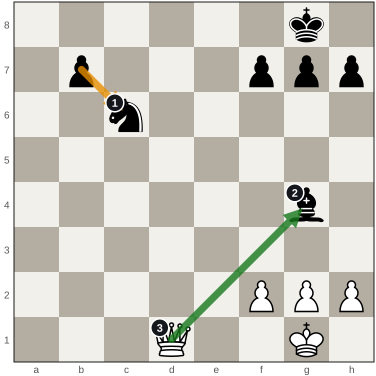
The idea
A piece that nothing defends can often be taken for free.
- The knight is defended by a pawn.
- Nothing defends the bishop: it is loose.
- So the queen takes it, and nothing can take her back.
In a game: Look for pieces that nothing defends, and count attackers and defenders before you take.
The lesson
A piece is loose when nothing defends it. If it is also attacked, you can usually take it for free, because the other side has no way to take your piece back. Players have a saying for it: loose pieces drop off.
It is White’s move. Black’s knight on c6 is defended by the pawn on b7, but the bishop on g4 is defended by nothing. Press Next move.
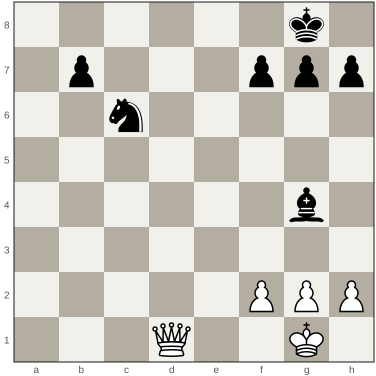
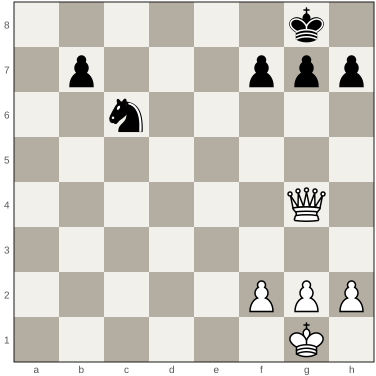
- 1. Qxg4 The queen takes the loose bishop. Nothing can take the queen back, so White has won a whole piece.
Find the move
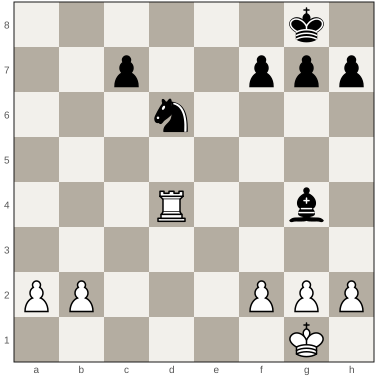
White to move. Your rook attacks two black pieces, the knight on d6 and the bishop on g4. Only one of them is a free capture. Take it.
A hint
Check which of the two pieces has a defender.
Show the answer
1. Rxg4
Rxg4 wins the bishop, which nothing defended. Taking the knight with Rxd6 would be a mistake: the pawn on c7 takes back, and a rook is worth more than a knight.
A question
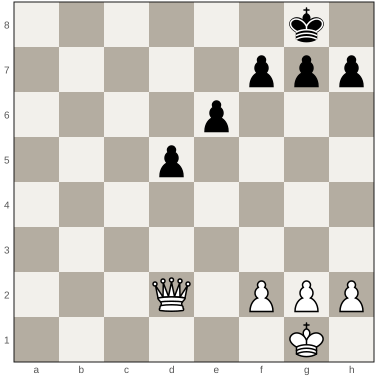
White to move. Should the queen take the pawn on d5?
Show the answer
No, the pawn on e6 would take the queen.
Right. The pawn on d5 is defended. If you capture a defended piece, the other side takes back, and a queen is worth far more than a pawn.
Find the move
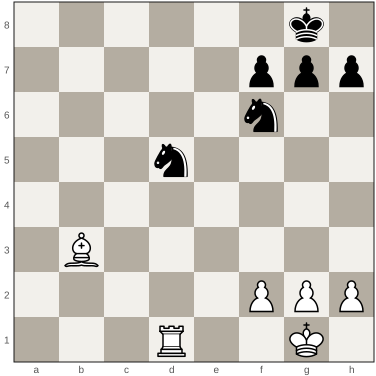
White to move. The knight on d5 is attacked twice, by your bishop and your rook, and defended once, by the knight on f6. Win it. Which piece should capture first?
A hint
Take with the piece that is worth less.
Show the answer
1. Bxd5 Nxd5 2. Rxd5
Capture with the cheaper piece first. After Bxd5 Nxd5 Rxd5 White has won two knights for a bishop. Starting with the rook would give up a rook for the same two knights.
Find the move
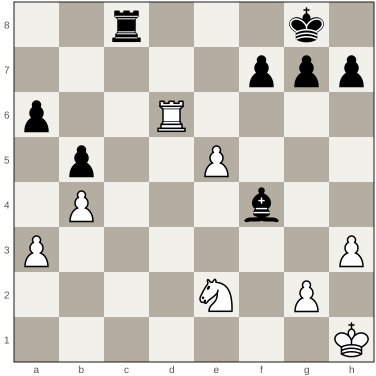
White to move. Find the free piece.
A hint
Look for a black piece that has no defender.
Show the answer
31. Nxf4 Rc1+ 32. Kh2
Nxf4 takes the bishop on f4. Nothing defended it, so White wins a whole piece.
Find the move
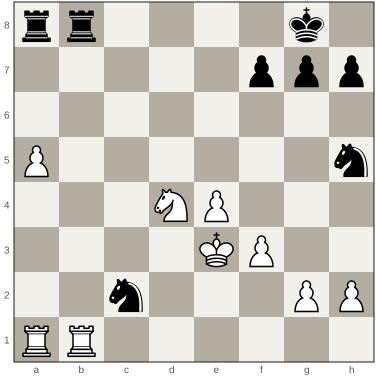
White to move. Take the free piece.
A hint
One black piece is attacked by your knight and defended by nothing.
Show the answer
29. Nxc2 Rxb1 30. Rxb1
Nxc2 takes the knight on c2. Nothing defended it, and it was attacking your king and your rook.
Find the move
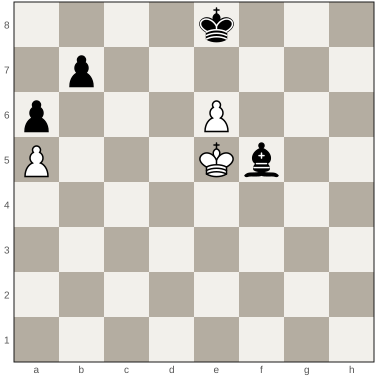
White to move. Find the free piece.
A hint
Your king is next to a black piece that nothing defends.
Show the answer
48. Kxf5 Ke7 49. Ke5
Kxf5 takes the bishop. A king can capture too, as long as the piece is not defended.
Practise
Now some on your own. They get a little harder as you do well.
In the lesson, 5 rated puzzles on this theme come from the puzzle bank, chosen near your rating.
In numbers
In the puzzle bank
1,185 puzzles in GreyChess’s bank practise it. Half of them are rated between 648 and 2,006.
The piece that makes the first move of the answer: queen 41%, rook 24%, king 11%, knight 10%, bishop 9%, pawn 5%, in puzzles from the Lichess puzzle database.