Chess lessons › Chess openings
Traps to know
Six famous traps, how each one works, and how to avoid falling for it.
The idea
A trick that wins material, or the game, from a player who misses it.
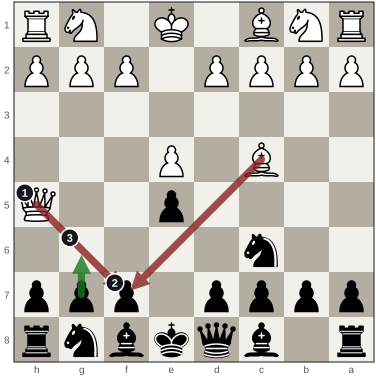
- White’s queen and bishop both aim at f7.
- Only the king guards f7, so the queen could take it with checkmate.
- Stop it: g6 attacks the queen and blocks her path to f7.
In a game: When your opponent offers something for free, stop and look for the catch.
The lesson
Find the move
A trap is a trick that wins material, or the whole game, from a player who does not see it coming. Here are six famous ones, and how to deal with each.
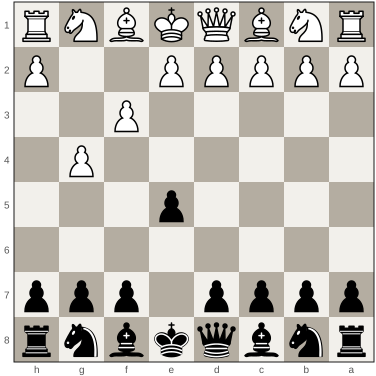
First, the shortest checkmate of all. White has pushed the f-pawn and the g-pawn, and the diagonal to the king is open. Black to move: give checkmate.
A hint
Your queen can reach the diagonal that points at the white king.
Show the answer
2... Qh4#
Qh4 is checkmate, and it is called the Fool’s Mate. The f-pawn and the g-pawn left the diagonal open, so the queen checks and nothing can block, capture or run. You will never fall for it if you keep those two pawns at home early in the game.
The Scholar’s Mate is a famous trap against beginners. White aims the queen and the bishop at f7, the pawn that only the black king guards, and mates in four moves if Black does not notice. Watch what goes wrong for Black.
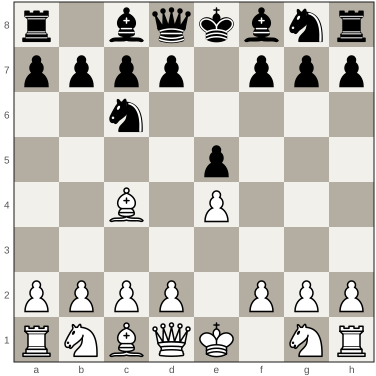
- 3. Qh5 The queen and the bishop now both aim at f7.
- 3... Nf6 Black attacks the queen, but forgets about f7.
- 4. Qxf7# Checkmate. The bishop protects the queen, so the king cannot take her.
Find the move
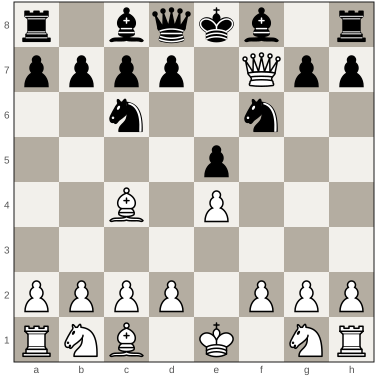
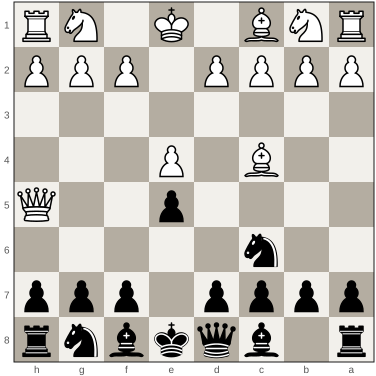
Black to move. White’s queen and bishop both aim at f7, and Qxf7 would be checkmate. Stop it.
A hint
Attack the queen, or add a second defender to f7.
Show the answer
3... g6
All four moves stop the mate. g6 attacks the queen and blocks her diagonal to f7. Qe7, Nh6 and Qf6 each add a second defender to f7. When you play Black, check f7 early.
Find the move
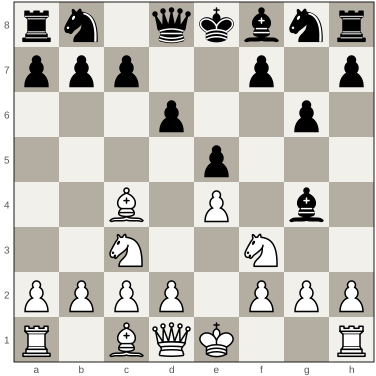
White to move. Black’s bishop on g4 attacks your knight on f3, and your queen stands behind it. Black has just played ...g6. Find the strongest move, even though it offers your queen.
A hint
Take the pawn on e5 with the knight. Your queen is attacked, but Black cannot take it safely.
Show the answer
5. Nxe5 Bxd1 6. Bxf7+ Ke7 7. Nd5#
Nxe5! offers the queen. If Black takes it with Bxd1, then Bxf7+ Ke7 and Nd5 is checkmate. This is Legal’s Mate. Black does not have to take the queen, and the next step shows what Black should do.
Find the move
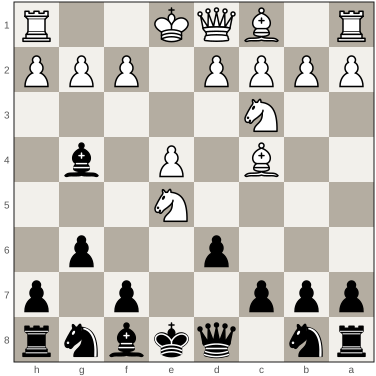
Black to move. White’s knight has taken on e5, and your bishop can take the queen. A free queen is a good moment to stop and look for the catch.
A hint
Do not take the queen. Take the knight with a pawn.
Show the answer
5... dxe5 6. Qxg4
Bxd1? loses to Bxf7+ Ke7 Nd5#, the mate you have just seen. dxe5 takes the knight instead. After Qxg4 White has won a pawn and stands better, but the game goes on.
Find the move
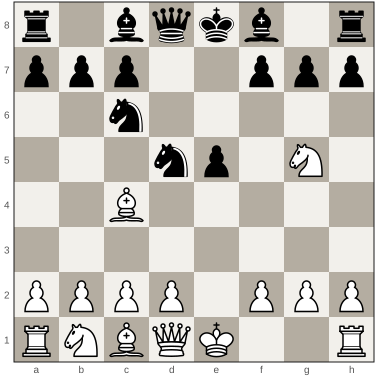
White to move. Black has taken on d5 with the knight. Your knight on g5 attacks f7, and only the king guards that pawn. Find the sacrifice.
A hint
Take the pawn on f7 with the knight.
Show the answer
6. Nxf7
Nxf7 is the Fried Liver Attack. The knight takes a pawn and attacks both the queen on d8 and the rook on h8. If the king takes the knight, it is dragged out into the open, and the engine rates the position clearly better for White.
Find the move
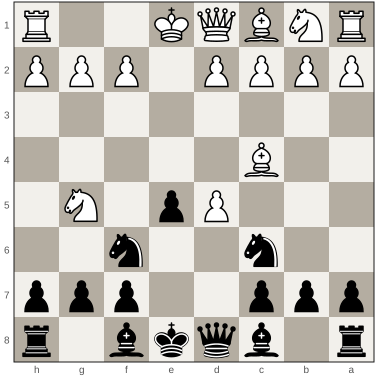
Black to move. White has just taken on d5. If you take back with the knight, 5...Nxd5, White plays Nxf7, the Fried Liver. Find a better move.
A hint
Attack the bishop on c4, or find a square for the knight on c6.
Show the answer
5... Na5
All three moves avoid 5...Nxd5. Na5 is the main one: the knight attacks the bishop on c4. b5 attacks the bishop with a pawn. Nd4 steps the knight away from the pawn on d5.
The Englund Gambit starts 1.d4 e5, and White is the one who can fall into the trap. Black gives a pawn and goes after the queenside with the queen. Watch the natural move 6.Bc3 go wrong.
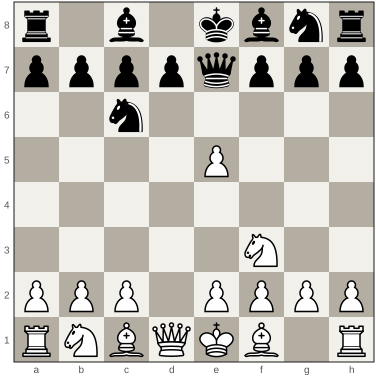
- 4. Bf4 White develops the bishop and guards the extra pawn on e5.
- 4... Qb4+ The queen checks, and she also attacks the bishop on f4 along the fourth rank.
- 5. Bd2 White blocks the check, and the bishop is safe again.
- 5... Qxb2 Black takes the pawn on b2, which wins back the pawn it gave, and the queen attacks the rook on a1.
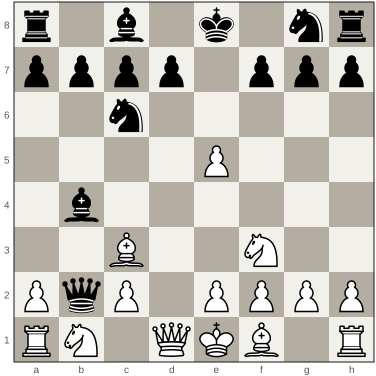
- 6. Bc3 It looks natural: the bishop attacks the queen. This is the mistake.
- 6... Bb4 Black’s bishop pins the bishop on c3: it cannot leave the line to its king. The queen still attacks the rook on a1, and the engine says Black is winning.
Find the move
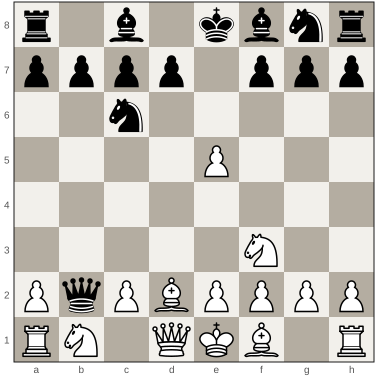
White to move. Black’s queen has taken the pawn on b2 and attacks your rook on a1. You have seen that 6.Bc3 is a trap. Find the move that is good for White.
A hint
Bring the knight from b1 out to c3.
Show the answer
6. Nc3
Nc3 clears the first rank, so your queen now defends the rook on a1. The engine rates the position clearly better for White.
Find the move
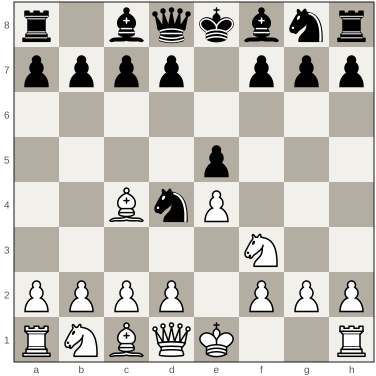
White to move. Black’s 3...Nd4 offers a pawn on e5, and it looks free. The knight is the thing to take. Take it, and then castle.
A hint
Take the knight on d4 with your knight. Do not take the pawn on e5.
Show the answer
4. Nxd4 exd4 5. O-O
Nxd4 removes the knight, and after exd4 and O-O White has the better game: the engine rates it clearly better for White. Lichess lists 3...Nd4 as the Blackburne-Kostić Gambit. It is also known as the Blackburne Shilling Gambit, and the next step shows the trap in it.
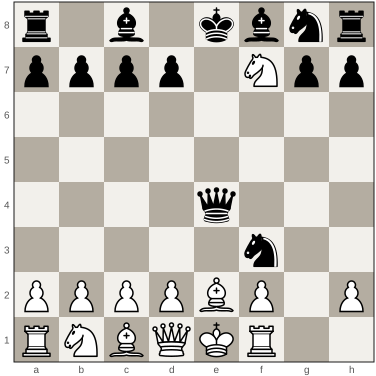
Here is the trap in the Blackburne Shilling Gambit. If White takes the pawn on e5, Black’s queen comes to g5 and attacks both the knight and the pawn on g2. A second greedy capture can end the game very fast.
- 4. Nxe5 White takes the pawn.
- 4... Qg5 The queen attacks the knight on e5 and the pawn on g2 at once.
- 5. Nxf7 White takes a second pawn. The knight attacks the queen and the rook on h8.
- 5... Qxg2 The queen takes the pawn on g2 and attacks the rook on h1.
- 6. Rf1 White saves the rook.
- 6... Qxe4+ Check.
- 7. Be2 White blocks with the bishop.
- 7... Nf3# Checkmate. White’s own pieces take away every square the king could use.
In numbers
In the puzzle bank
2,084 puzzles in GreyChess’s bank practise it. Half of them are rated between 931 and 1,954.
The piece that makes the first move of the answer: queen 37%, bishop 31%, knight 23%, pawn 4%, rook 4%, king 1%, in puzzles from the Lichess puzzle database.