Chess lessons › Chess endgames
Active rooks
Cut the king off, keep your rook behind the enemy pawn, and check from far away.

The idea
Cut the king off, put rooks behind passed pawns, check from far away.
- Your rook on the seventh rank keeps Black’s king on the back rank.
- Black’s rook is on the wrong file, not behind your pawn.
- Your king steps up in front of the pawn, and White wins.
In a game: In rook endings, cut the enemy king off and keep your rook behind passed pawns.
How the lesson begins
In rook endings the active rook usually decides the game. Here White has a passed pawn on f5, and the rook on a6 controls the whole sixth rank, so Black’s king cannot come out to meet the pawn. The winning plan is to cut the king off: White’s king steps up to the sixth rank and shuts the black king in on the back rank.
Watch the first moves.
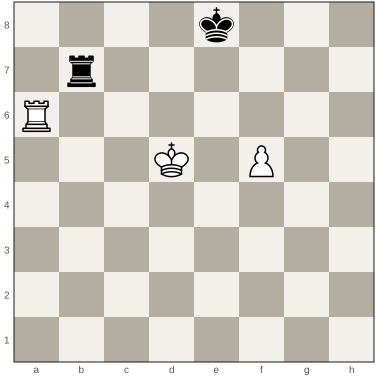
- 1. Ke6 The king steps up to the sixth rank, ahead of the pawn. Black’s king can no longer use d7, e7 or f7.
- 1... Re7+ Black’s rook gives check.
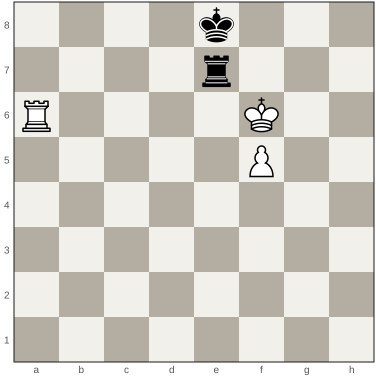
- 2. Kf6 The king steps out of the check and stays in front of the pawn.
A question
Now Black’s rook stands behind White’s passed pawn, on f1, and it is White’s move. Can White win?

Show the answer
No. It is a draw, because Black’s rook is behind the passed pawn.
Right. Rooks belong behind passed pawns, and that goes for the enemy’s passed pawn too. From behind, the rook attacks the pawn and keeps the white king busy. Black holds the draw.
In numbers
In the puzzle bank
1,545 puzzles in GreyChess’s bank practise it. Half of them are rated between 951 and 2,350.
The piece that makes the first move of the answer: rook 68%, pawn 21%, king 11%, in puzzles from the Lichess puzzle database.
Positions to practise
64 positions in the study, every result proved by the tablebase: 30 are wins, 29 draws and 5 losses for the side to move, with best play on both sides.