Chess lessons › Chess endgames
The Philidor defence
Hold a rook ending a pawn down: the rook on the sixth rank, then behind the pawn.
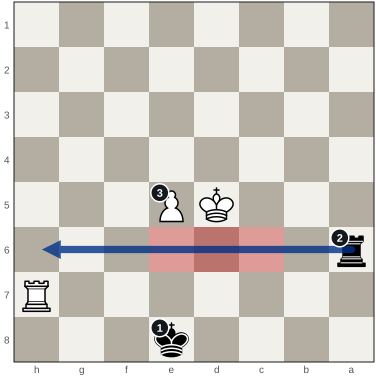
The idea
Draw a pawn down: rook on the sixth rank, then checks from behind.
- Your king stands in front of the pawn, on the back rank.
- Your rook holds the sixth rank, so White’s king cannot step up.
- Once the pawn reaches the sixth, your rook goes behind it and checks.
In a game: A pawn down in a rook ending? Keep your king in front of it and your rook on your third rank.
How the lesson begins
The Philidor defence saves a rook ending that looks hopeless. White has an extra pawn on the fifth rank, and Black’s king stands in front of it. Black keeps the king on the back rank and the rook on the sixth rank, which is the third rank counting from Black’s side. From there the rook stops the white king from stepping up to the sixth rank.
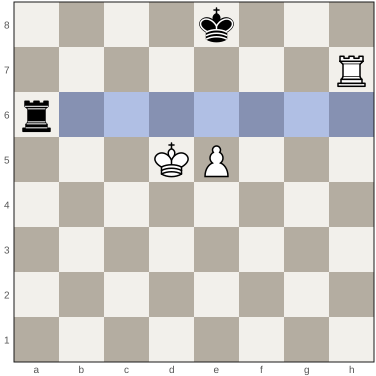
This position is a draw. The marked squares are the ones the rook guards.
A question
It is White’s move. What does Black’s rook on a6 do?
Show the answer
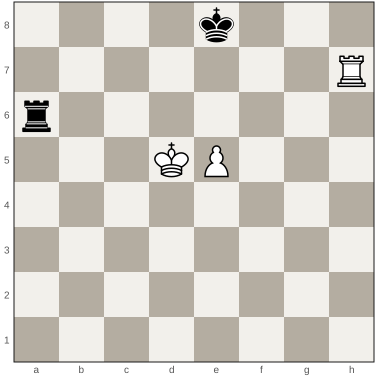
It keeps the white king off the sixth rank.
Right. The rook controls the whole sixth rank, so the white king on d5 cannot step to c6, d6 or e6. Without that step the king cannot get in front of its pawn.
In numbers
Positions to practise
64 positions in the study, every result proved by the tablebase: 30 are wins, 29 draws and 5 losses for the side to move, with best play on both sides.