Touch-move and good manners
Touch a piece and you must move it, and how to behave at the board.
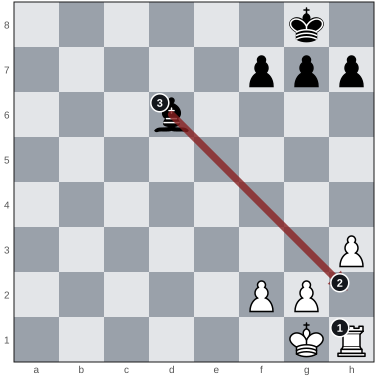
The idea
Touch a piece and you must move it, if it has a legal move.
- You touched the rook on h1, so you must move it.
- Its only legal move is to h2.
- There the bishop can take it, so think before you touch.
In a game: Keep your hands off the pieces until you have chosen your move.
The lesson
When you play over the board, one rule you must know is touch-move. If you deliberately touch one of your own pieces, you must move it, as long as it has a legal move. If you deliberately touch one of your opponent’s pieces, you must capture it, if you can.
On your turn, to straighten a piece on its square without moving it, say “I adjust” first, then touch it.

A question
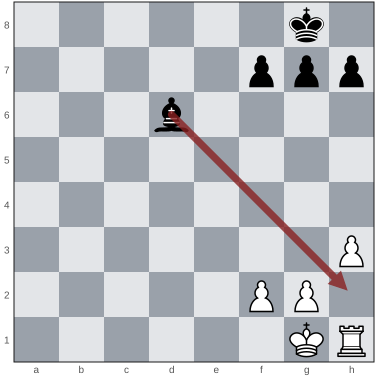
You touch your rook on h1, meaning to move it. Then you look again. What must you play?
Show the answer
Rh2, its only move, even though the bishop can take it there.
Right. A touched piece must move if it can, and Rh2 is the rook’s only legal move. The bishop on d6 can then take it. Think before you touch.
A question
You touch your knight on d2. It is pinned by the bishop on b4: moving it would leave your king in check. What now?

Show the answer
You may play any legal move.
Right. If the touched piece has no legal move, the rule cannot be kept, and you may play any legal move.
Find the move
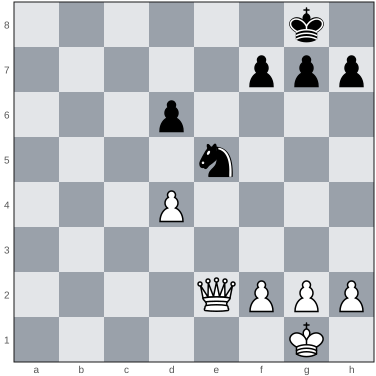
You touched the black knight on e5, so you must capture it. You can take it in two ways. Choose the capture that wins material.
A hint
The knight is defended by the pawn on d6.
Show the answer
1. dxe5
dxe5 takes the knight with a pawn. If Black takes back, you have still won a knight for a pawn. Qxe5 would also be a legal capture, but the pawn on d6 would then take your queen.
A move is finished when your hand lets go of the piece on its new square. While you still hold it, you may put it on any square it can legally reach. Once you let go, the move stands.
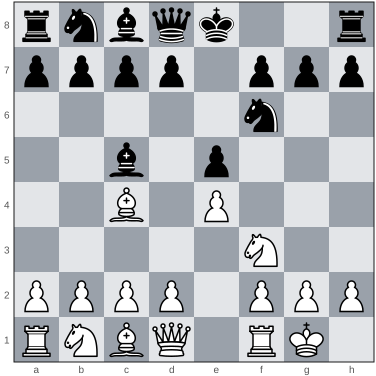
To castle, touch the king first and move it two squares, then move the rook. If you touch the rook first, you must move the rook, and you may not castle with it on that move.
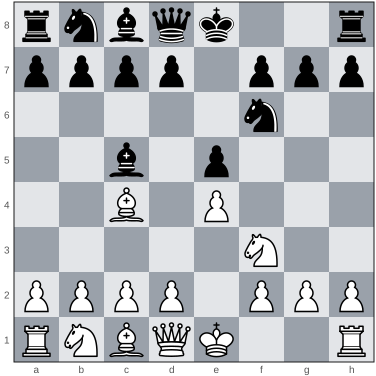
- 4. O-O The king goes first, from e1 to g1, and then the rook from h1 to f1.
A question
When should you offer a draw?
Show the answer
After making your move, before pressing your clock.
Right. That is what the FIDE rules ask. Your opponent then decides while their own clock runs.
A question
You are a queen behind with no hope left. What is a good way to end the game?
Show the answer
Resign: say “I resign” and shake hands.
Right. Resigning ends the game at once and is good manners. Online, use the resign button.
A question
During the game, may you chat with your opponent about the position?
Show the answer
No. Keep quiet while the game is on.
Right. Talking can distract your opponent, which the rules forbid. You may still offer a draw, say “I adjust” or speak to the arbiter. Shake hands before the game and after it.