Chess lessons › Chess endgames
Bishop and knight endings
Why the bishop usually helps on both wings, and when the knight is better.
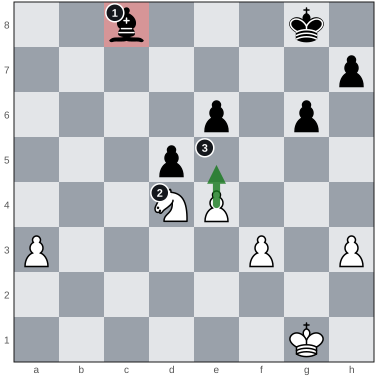
The idea
A bishop usually helps both wings; a good knight beats a bad bishop.
- Black’s bishop is shut in by its own pawns on light squares.
- White’s knight stands on a dark square the bishop can never attack.
- e5 fixes Black’s pawns on light squares for good.
In a game: Count the pawns on your bishop’s colour: the more there are, the worse the bishop.
How the lesson begins
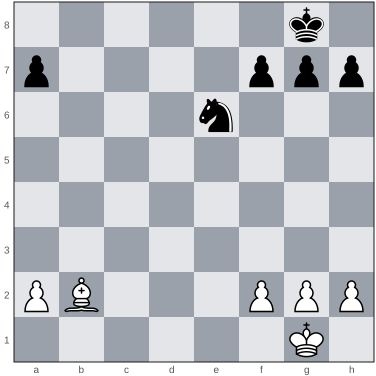
With pawns on both wings, books usually prefer a bishop to a knight. From b2 the bishop reaches both wings at once: it guards a3 on the queenside and attacks g7 on the kingside. A knight is slower. The one on e6 needs three moves just to attack the pawn on a2.
This is a tendency, not a rule. Here the position is about level.
A question
Both sides still have pawns on the queenside and the kingside. Which minor piece finds it easier to switch from one wing to the other in a single move?
Show the answer
The bishop: one diagonal can reach all the way across the board..
Right. A bishop on a long diagonal reaches from one wing to the other in one move. A knight needs several short jumps to do the same.
In numbers
In the puzzle bank
861 puzzles in GreyChess’s bank practise it. Half of them are rated between 1,020 and 2,304.
The piece that makes the first move of the answer: pawn 53%, bishop 28%, king 19%, in puzzles from the Lichess puzzle database.