Chess lessons › Good chess habits
How to study chess
A little often: tactics most days, endgames and master games each week, and your own games reviewed.
The idea
A little often: tactics, endings, master games and your own games.
- Cover the moves of a master game and guess each one.
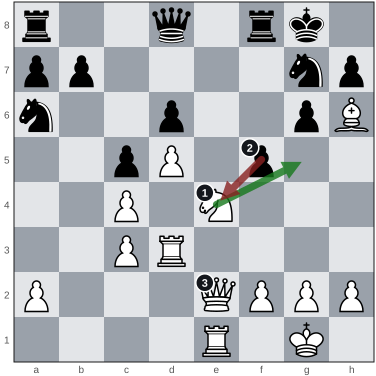
- Here the pawn on f5 attacks the knight.
- Capablanca’s Ng5 also opens the e-file for the queen.
In a game: Tactics most days; each week an ending, a master game and a review of your games.
How the lesson begins
Study a little and often rather than a lot once in a while. A plan that works for most players: most days, a few tactics puzzles. Each week, a few endgame positions, a master game or two, and a review of your own games. Openings by their ideas: why the pieces go where they go, not long lists of moves.
Come back to the positions you got wrong a few days later, until you get them right.

A good way to study a master game is to guess the move: cover the moves, guess each one for the side you are following, then compare.
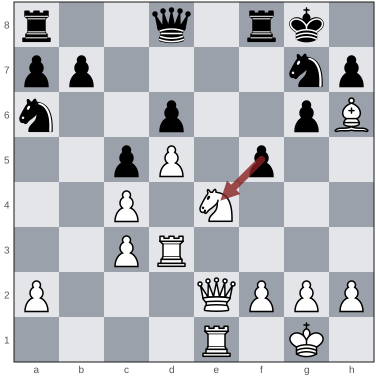
This is José Raúl Capablanca against Jacques Mieses, an exhibition game in Berlin, 1913. You are White. Black’s pawn on f5 has just attacked the knight on e4.
Find the move
White to move. Guess Capablanca’s move.
A hint
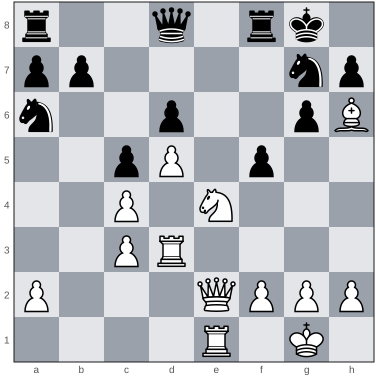
The knight must move. Which square also opens the e-file for your queen?
Show the answer
19. Ng5
Capablanca played Ng5. The knight leaves the pawn’s attack, opens the e-file for the queen and rook, and from g5 it aims at e6. It is the engine’s first choice. If you guessed another move, play both on the board and ask why his was better.
In numbers
Positions to practise
120 positions in the study, every result proved by the tablebase: 41 are wins, 59 draws and 20 losses for the side to move, with best play on both sides.