Chess lessons › Good chess habits
Making a training plan
Find what costs you points in your games, set a week you can keep, and check after a month what changed.
The idea
Train what costs you points, in a week you can keep, and check it.
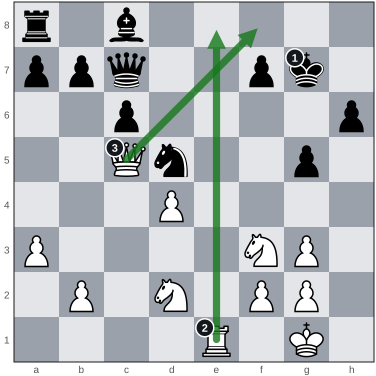
- Sort your losses: here a tactic decides the game.
- Alekhine’s Re8 attacks the bishop on c8 and guards f8.
- Then the queen on c5 can come to f8, next to the king.
In a game: Write one line for each loss: where it turned, and why. Train what comes up most.
How the lesson begins
A training plan answers three questions. What costs you the most points? How much time can you give each week? How will you know if it works?
The answer to the first question is in your own games. Go through your last ten or twenty losses and write one line for each: where the game turned, and why. A missed tactic, a piece left unprotected, an ending you did not know, an opening you did not understand, or time trouble.

A question
You sort your last ten losses. Six turned on a tactic you missed or a piece left unprotected, two on an ending, and two on an opening. Where should most of your time go?
Show the answer
Tactics, and a check for loose pieces and threats before every move.
Right. Six losses in ten came from tactics and loose pieces, so that is where training brings the most points. Give the endings and openings some time too, but less.
In numbers
Positions to practise
120 positions in the study, every result proved by the tablebase: 41 are wins, 59 draws and 20 losses for the side to move, with best play on both sides.
Blunders in real games
| Rating | Value |
|---|---|
| Under 800 | 6.6 |
| 800 to 1199 | 4.2 |
| 1200 to 1599 | 2.8 |
| 1600 to 1999 | 2 |
| 2000 and up | 1.3 |