Chess lessons › Good chess habits
Offering and answering a draw
The FIDE rules for a draw offer, and a careful look at the board before you accept one.
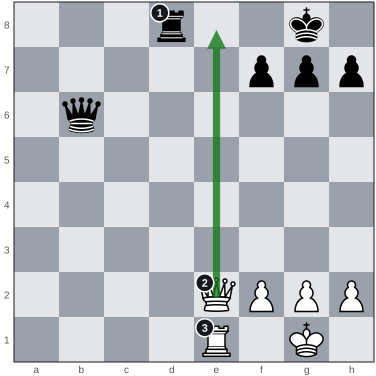
The idea
Offer after your move, before the clock, and look before you accept.
- The material is level, and your opponent offers a draw.
- But the queen can check on e8, with the rook behind her.
- When the black rook takes, the white rook takes back with mate.
In a game: Before you answer a draw offer, look at every check and capture.
How the lesson begins
Under the FIDE rules a draw offer has a fixed order: make your move on the board, offer the draw, then press your clock. An offer at another moment still counts, but it may disturb your opponent, which the rules forbid.
You cannot attach a condition to an offer, and you cannot take it back. Both players note it on the scoresheet with the sign (=). Some events forbid draw offers before a set number of moves, or without the arbiter’s consent.

A question
When, under the FIDE rules, should you offer a draw?
Show the answer
After making your move on the board and before pressing your clock.
Right. Your opponent then thinks about the offer on their own time, with your move on the board.