Chess lessons › Chess openings
Gambits
Giving a pawn for time: the King’s Gambit, the Evans and the Danish, and how to answer a gambit.
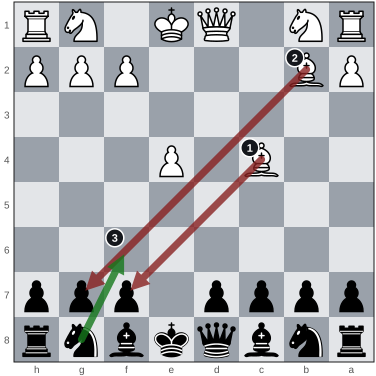
The idea
A pawn given up for time, and how to take it or give it back.
- In the Danish, White has given two pawns to bring out two bishops.
- Both bishops aim at Black’s king side, at f7 and g7.
- Black develops with a threat: the knight on f6 attacks e4.
In a game: When you are offered a pawn, ask what your opponent gets for it before you take.
How the lesson begins
A gambit is an opening where one side gives up material, usually a pawn, to get something for it: a lead in development, open lines against the king, or a bigger share of the centre. The other side can accept the gambit by taking, or decline it.
The King’s Gambit, 1.e4 e5 2.f4, is the most famous. White offers the f-pawn to pull Black’s e-pawn away from the centre, so that d4 can follow. Among players rated 1200 to 1599 on Lichess, Black took the pawn in 42% of the games, and White scored 54% after 2.f4.
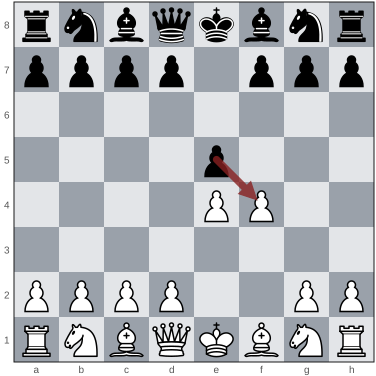
Find the move
Black to move. White has offered the f-pawn. Accept the gambit: the engine counts taking the pawn among the best moves here.
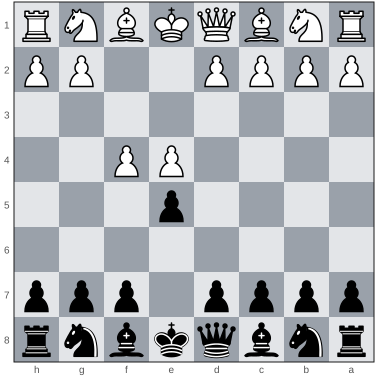
A hint
The pawn on e5 takes on f4.
Show the answer
2... exf4
exf4 wins a pawn, and the e-pawn has left the centre. Now Black has to deal with White’s quick development. A common way to do that is to give the pawn back at the right moment, as the next step shows.
In numbers
How often it is played
| Rating | Value |
|---|---|
| Under 800 | Too few games |
| 800 to 1199 | 1.9 |
| 1200 to 1599 | 3.2 |
| 1600 to 1999 | 3.5 |
| 2000 and up | 1.3 |
How the games ended
White won 54%, 4% were drawn and Black won 42%, over 5,364 games that start this way, in a sample of rated Lichess games from 2026.