Chess lessons › Chess openings
The King’s Indian Attack
Play Nf3, g3, Bg2, castling, d3, Nbd2 and e4 against almost anything, then push e5 and attack the king.
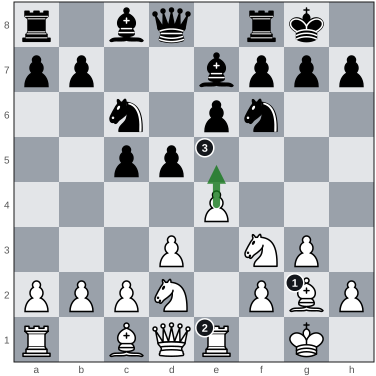
The idea
A set-up for White: Nf3, g3, Bg2, castling, d3, Nbd2 and e4.
- The bishop on g2 and the castled king are the base of the set-up.
- The rook on e1 backs up the pawn on e4.
- The push e5 gains space and drives the knight from f6.
In a game: Against ...d5 and ...e6, aim for d3, Nbd2, e4 and then e5.
How the lesson begins
The King’s Indian Attack is a set-up more than a line of moves. White plays Nf3, g3, Bg2 and castles, then d3, the other knight to d2, and e4. These are the moves of the King’s Indian Defence, played with the white pieces and so one move ahead.
Among players rated 2000 and above on Lichess, 2.g3 is the most played answer to 1.Nf3 d5, and White scores 55% after it.
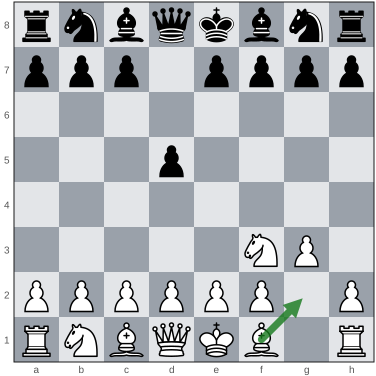
Find the move
White to move. Put the bishop from f1 on the long diagonal, on the square your g-pawn has just left.
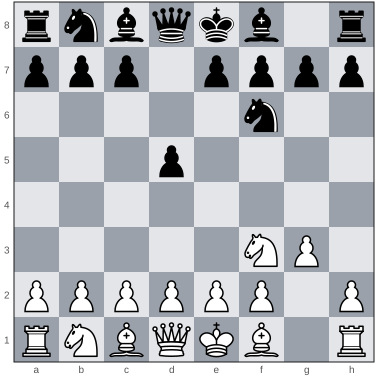
A hint
The g-pawn came from g2.
Show the answer
3. Bg2
3.Bg2, played in 96% of games among players rated 2000 and above. Next you castle, and the bishop on g2 helps to guard the castled king.
In numbers
How often it is played
| Rating | Value |
|---|---|
| Under 800 | Too few games |
| 800 to 1199 | 2.6 |
| 1200 to 1599 | 2.9 |
| 1600 to 1999 | 4.7 |
| 2000 and up | 13 |
How the games ended
White won 50%, 5% were drawn and Black won 45%, over 8,616 games that start this way, in a sample of rated Lichess games from 2026.