Counting attackers and defenders
Before you take a defended piece, count who attacks it and who defends it.
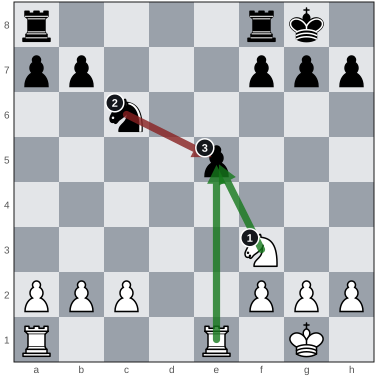
The idea
Count who attacks a piece and who defends it before you take.
- The knight and the rook both attack the pawn.
- Only the knight on c6 defends it.
- More attackers than defenders, so White takes, knight first.
In a game: Before you take a defended piece, count attackers and defenders, and take with the cheapest first.
The lesson
Before you take a piece that is defended, count. How many of your pieces attack it? How many enemy pieces defend it? The two sides take in turn on that square, so the side with more pieces aimed at it makes the last capture.
Here the black pawn on e5 is attacked twice, by the knight on f3 and the rook on e1. It is defended once, by the knight on c6. Two against one, so White can win it. Press Next move.
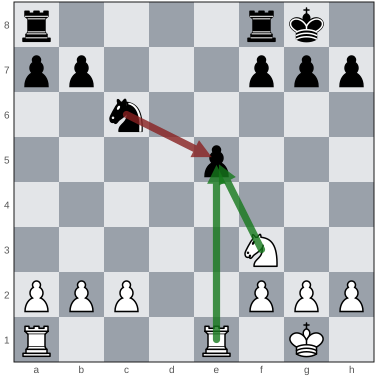
- 1. Nxe5 The knight takes first, because it is worth less than the rook.
- 1... Nxe5 If Black takes back,
- 2. Rxe5 the rook makes the last capture. White has won a pawn.
A question
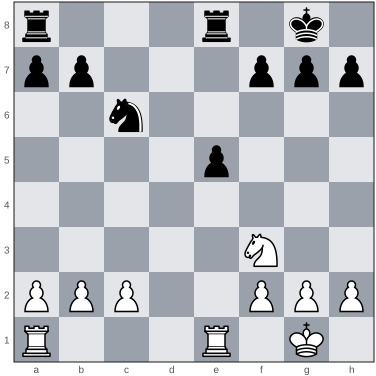
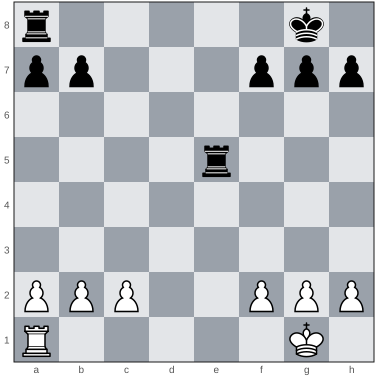
Now Black’s rook stands on e8, so it defends the pawn too. White to move. Should White take on e5?
Show the answer
No. Two attackers against two defenders, so Black makes the last capture.
Right. When the numbers are equal, the defender takes last. Here that would cost White a rook for a pawn.
Here is that count played out. Press Next move.
- 1. Nxe5 The knight takes the pawn.
- 1... Nxe5 Black’s knight takes back.
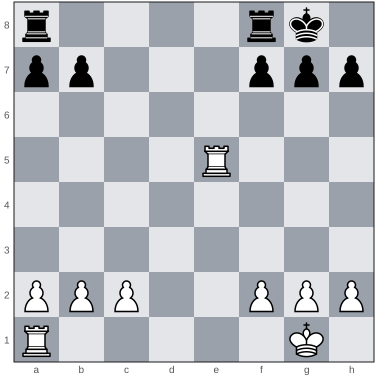
- 2. Rxe5 The rook takes back.
- 2... Rxe5 Black’s rook makes the last capture. White is a rook down for a pawn.
Find the move
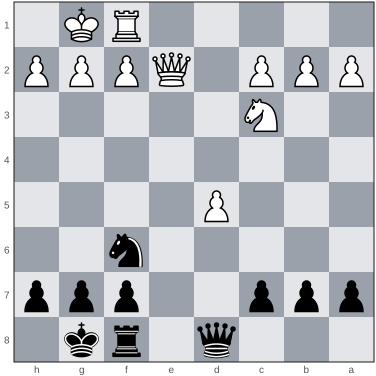
Black to move. The white pawn on d5 is attacked twice, by your knight and your queen, and defended once, by the knight on c3. Win it. Which piece should take first?
A hint
Take with the cheaper piece, and keep the queen for last.
Show the answer
1... Nxd5
Start with the piece that is worth less. After Nxd5, if White takes back with Nxd5, your queen makes the last capture with Qxd5, and you have won a pawn. Starting with the queen would lose her: after Qxd5 Nxd5 Nxd5 you have given a queen for a pawn and a knight.
Find the move
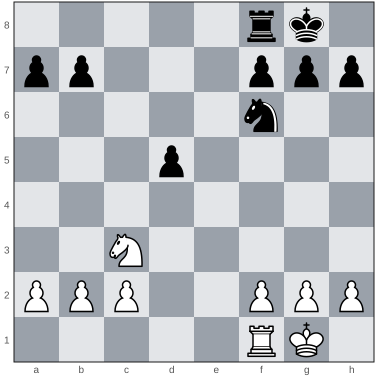
Sometimes the count is not on your side yet. The black pawn on d5 is attacked once, by your knight, and defended once, by the knight on f6. White to move: attack it a second time.
A hint
Which of your pieces can reach the d-file?
Show the answer
1. Rd1
Rd1 brings the rook to the d-file. Now the pawn is attacked twice and defended once, so White threatens to win it.
Find the move
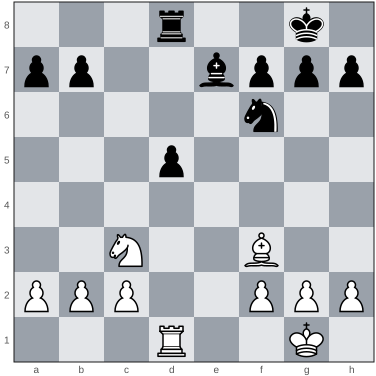
A longer count. White to move. The pawn on d5 is attacked three times, by your knight, bishop and rook. It is defended twice, by the knight on f6 and the rook on d8. Win it with the best capture.
A hint
Count first, and keep the rook for last. Which would you rather have on d5 at the end, your knight or your bishop?
Show the answer
1. Bxd5
Three attackers against two defenders, so the pawn can be won. Keep the rook for last. After Bxd5 Nxd5 Nxd5 White is a pawn up, and the knight on d5 also attacks the bishop on e7. Taking with the knight first also wins the pawn, but without that extra threat. Black should stop there: Rxd5 Rxd5 would only give a rook for a knight.