Chess lessons › Chess endgames
Winning with an extra pawn
Make a passed pawn from your majority, use it to pull the enemy king away, and win on the other wing.
The idea
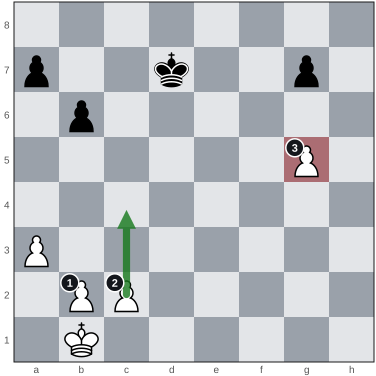
Make a passed pawn from your majority to pull the king away.
- White has three pawns against two on the queenside.
- c4 starts making a passed pawn there.
- The pawn on g5 can go: taking it pulls Black’s king far away.
In a game: A pawn up in a pawn ending, see which wing your majority is on, and push it.
How the lesson begins
An extra pawn usually wins a king and pawn ending, but only with a plan. The plan most often goes like this: make a passed pawn from the wing where you have more pawns (your majority), and use it to pull the enemy king away. Then your king, or your other pawns, win on the other wing.
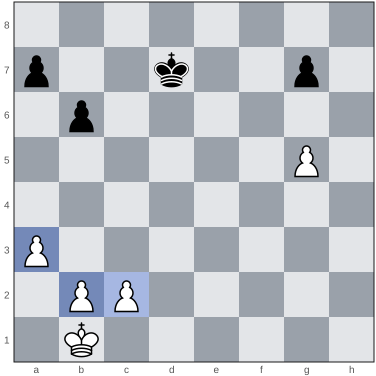
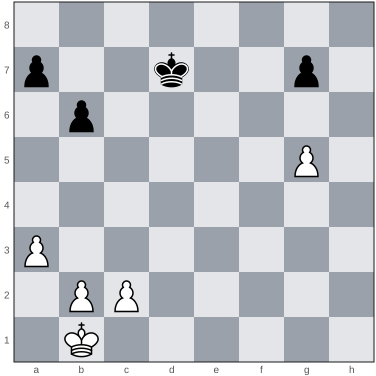
This is Richard Réti against Jacques Mieses, Košice 1918. White has three pawns against two on the queenside. White to move.
Find the move
White to move. Start making a passed pawn on the queenside.
A hint
Push one of the three queenside pawns two squares.
Show the answer
44. c4
c4 (or b4) starts the queenside pawns moving. Three pawns against two will give White a passed pawn there. Réti played c4. The engine rates both moves as winning easily, far ahead of a slow king move such as Kc1.
In numbers
Positions to practise
120 positions in the study, every result proved by the tablebase: 41 are wins, 59 draws and 20 losses for the side to move, with best play on both sides.