Chess lessons › Good chess habits
Judging the position at the end of a line
Compare material, king safety and activity at the end of a line before you choose.
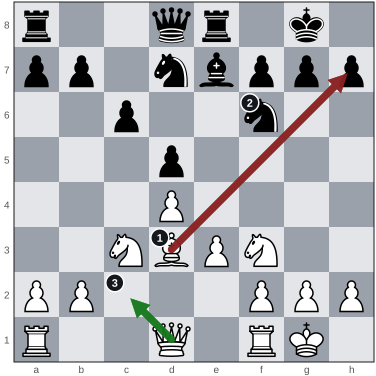
The idea
Compare material, king safety and activity before you choose.
- One plan gives up this bishop on h7 to open the king.
- But this knight guards h5 and h7, so the attack runs out.
- The quiet Qc2 keeps material level and both kings safe.
In a game: Judge the position at the end of the line, not the move that starts it.
How the lesson begins
Calculating a line is not the end of the job. Once you reach a quiet position, judge it. Compare three things: material (who has won or lost what), king safety (whose king is more exposed), and activity (whose pieces do more). When you have two lines to choose from, play the one whose end position is better for you, not the one that looked most exciting.

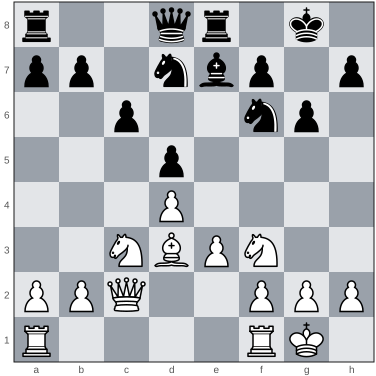
White to move, choosing between two plans: the bishop sacrifice Bxh7+, and a quiet move such as Qc2, which brings the queen into play. Follow each one to a quiet position, then judge the end, not the start.
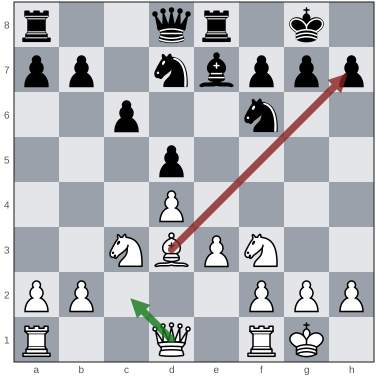
Here is the sacrifice. Material: White has given a bishop for a pawn. King safety: the black king has lost its h-pawn, and White has four checks, but none of them gets anywhere. The knight on f6 guards h5 and h7, the squares the white queen would need. White is simply a piece for a pawn down.
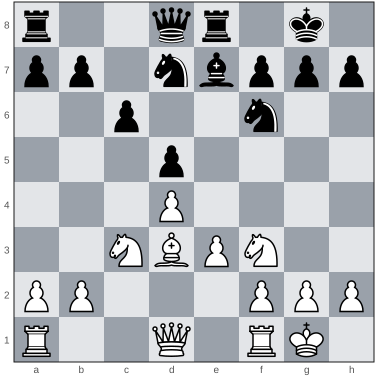
- 14. Bxh7+ The bishop takes a pawn with check. Black can take it with the king or the knight.
- 14... Kxh7
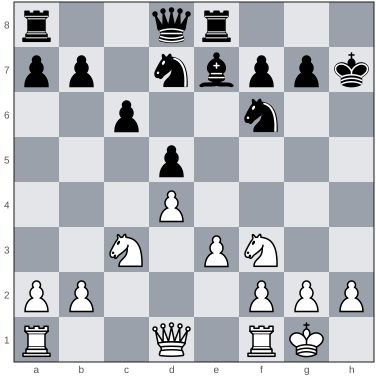
Here is the quiet move, followed to the same depth. Black answers g6. Material is level, both kings are safe, and the game goes on.
- 14. Qc2 g6
A question
Compare the two end positions. After the sacrifice, White is a piece for a pawn down and the attack has run out. After Qc2, material is level and both kings are safe. Which plan should White choose?
Show the answer
Qc2, because it keeps material level and both kings safe.
Right. A line that loses material for nothing is worse than a quiet move that keeps the balance.