Chess lessons › Good chess habits
Looking for the opponent’s best reply
Before you play an attacking move, work out your opponent’s best answer to it.
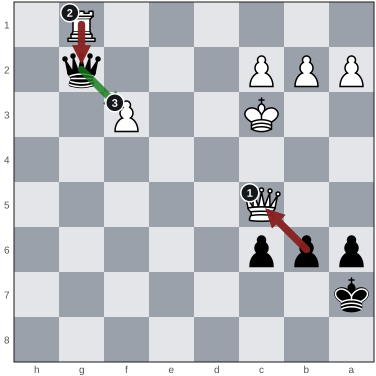
The idea
Before you attack, check for the reply you might have missed.
- Your pawn attacks the white queen, and it looks free to take.
- But this rook attacks your own queen, which nothing defends.
- Check first with the queen, and only then take on c5.
In a game: Before you take a hanging piece, check whether one of yours is hanging too.
How the lesson begins
Finding a good move is only half the job. Before you play it, ask: what is my opponent’s best reply? Three replies are easy to miss: a capture of one of your own pieces that you left loose, a recapture you did not see, and a defender guarding the square from far away.
Each position below has a capture that looks natural. Look for the reply before you decide.

Black is a rook down. The white queen on c5 looks like a free capture: the pawn on b6 attacks it. But the rook on g1 attacks your queen, and nothing defends her. Step through what happens if you take at once.
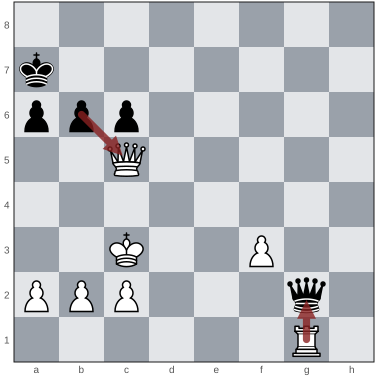
- 43... bxc5 44. Rxg2 White’s reply: the rook takes your queen. The queens are off, and White is still a rook up.
Find the move
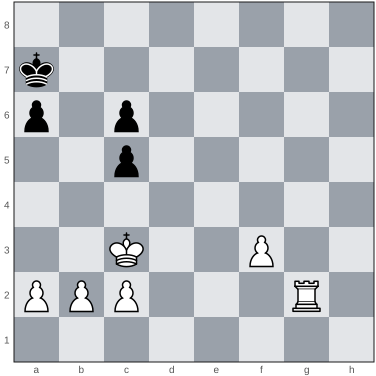
Black to move. Find a way to keep your queen and still win White’s.
A hint
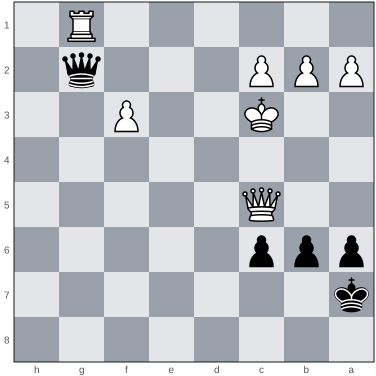
Move your queen with check, so that White has no time to save theirs.
Show the answer
43... Qxf3+ 44. Kd2 bxc5
Qxf3+ moves your queen off g2 and takes a pawn with check. White must answer the check, and then bxc5 takes the queen that was left on c5. You keep your queen, and White has lost theirs.