Chess lessons › Good chess habits
Practical decisions under pressure
Ahead: trade into a won ending. Worse: do not trade into a lost one. Lost: set the hardest problem.
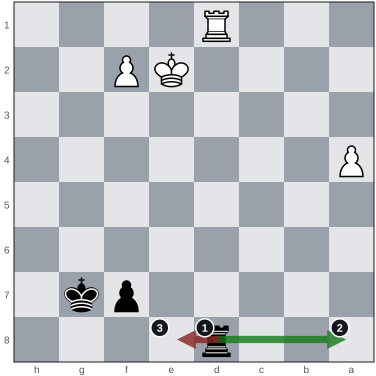
The idea
Choose the move that asks least of you and most of your opponent.
- Black’s rook is attacked and the ending is lost.
- Ra8 leaves White 23 moves, and only three win.
- Re8+ leaves White four moves, and all four win.
In a game: When a move looks active, count the replies that still win for the other side.
How the lesson begins
In a real game you have a clock, and so does your opponent. The best move on paper is not always the best choice at the board. One move may win but ask you for exact replies, while another wins just as surely and lets you slip. When two moves are both good, ask which one asks less of you and more of your opponent.
Three situations follow, each on a position the tablebase has checked. Ahead: trade into a won ending. Worse: keep pieces on when the trade leaves a lost ending. Lost: set the hardest problem.

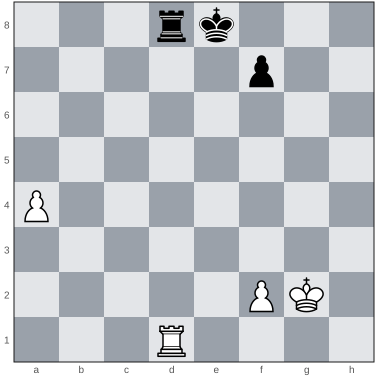
You are a pawn up in a rook ending and it is your move. Black’s rook on d8 faces yours on d1, and Black’s king guards d8. The tablebase, which knows every ending of seven pieces or fewer, says eight moves still win: the trade Rxd8+ and seven moves of the rook along the first rank. Every other move throws the win away.
You have little time left. Which win would you choose?
Find the move
White to move, a few seconds on the clock. Which win do you play?
A hint
One of the winning moves leaves no rooks on the board.
Show the answer
1. Rxd8+ Kxd8
Rxd8+ takes a rook with check, and after Black takes back, only kings and pawns are left. With little time that is the practical choice: there are fewer pieces to look after. The engine ranks it first, and the tablebase confirms that White still wins.
In numbers
Positions to practise
13 positions in the study, every result proved by the tablebase: 10 are wins and 3 draws for the side to move, with best play on both sides.