Chess lessons › Good chess habits
Preparing for an opponent
Find what an opponent plays, pick a line and a plan that suit you, and prepare ideas rather than moves.
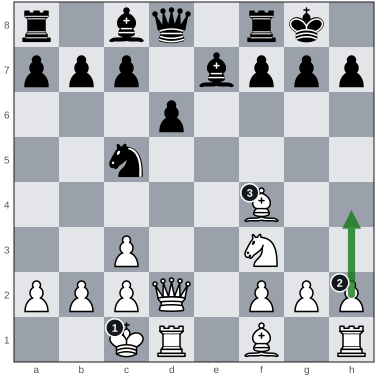
The idea
Find what they play, then pick a line and a plan that suit you.
- White castled long, so the king stands on c1.
- Black castled short, so White’s h-pawn can advance against the king.
- The bishop on f4 already aims at the pawn on d6.
In a game: Check which opening your opponent repeats, and keep a plan ready for when they change.
How the lesson begins
Preparing for an opponent is not learning twenty moves by heart. It is finding out what they play, choosing a line and a plan that suit you against it, and arriving at the board with ideas instead of a list.
Ask three questions of their recent games. What do they play? Look at their openings with White and with Black, and whether they repeat them. How do they meet your usual moves? Look first at their games against your opening. What will I do when they leave my line? A plan lasts after the memorised moves run out.
Real games show each question.

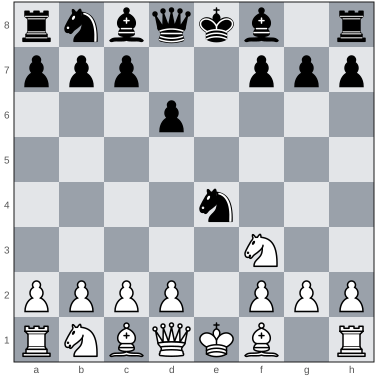
In a rapid match in Leon in 2005, Viswanathan Anand had White against Magnus Carlsen in two games. Black began both in the way you see: the Petroff Defence. Both games went the same way for the first four moves.
If you were about to play White against this opponent, those two games would tell you what to prepare for. A database makes the search quick: look up the player and sort their games by opening.
- 1. e4 e5 2. Nf3 Nf6 3. Nxe5 d6 4. Nf3 Nxe4
A question
An opponent has played the same defence in every game you can find. What do you do?
Show the answer
Prepare a plan against that defence, and stay ready for something else.
Right. A habit is a good reason to prepare, but a player can always change. A plan that fits the structure still helps if the first moves differ.