Chess lessons › Chess openings
From the opening to a middlegame plan
The pawns an opening leaves tell you the plan: a minority attack, or play on the wing your chain points to.
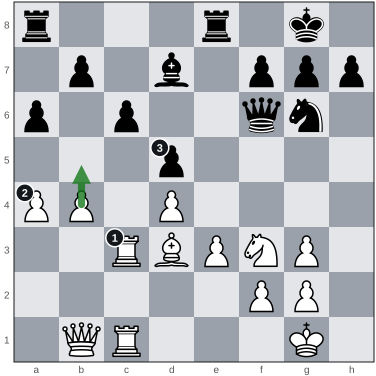
The idea
The pawns an opening leaves decide where to play in the middlegame.
- No white c-pawn: the c-file is half open for the rooks on c3 and c1.
- The a-pawn supports b5, so the b-pawn can go to b5 and hit c6.
- Swapping on c6 can leave Black’s pawn on d5 isolated, as in the game.
In a game: When the opening ends, look at the pawns: they show which wing to play on.
How the lesson begins
When the opening is over, look at the pawns. They change slowly, so they tell you where to play for many moves to come.
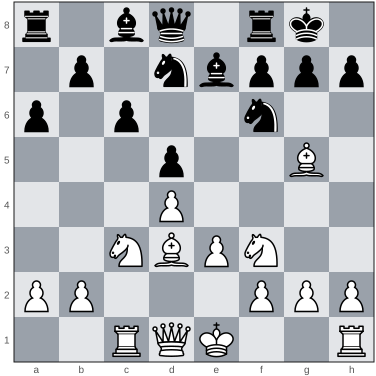
This is Max Euwe against Vera Menchik, Hastings 1930/31. The opening was the Queen’s Gambit Declined, and White took on d5 early. This pawn structure is the Carlsbad structure. White has two pawns on the queenside, on a2 and b2, against Black’s three, on a6, b7 and c6. White has no c-pawn, so the c-file is half open for White’s rook.
A question
White has fewer pawns on the queenside. Why would White still push them there?
Show the answer
Pushing the b-pawn to b5 to swap it on c6 leaves Black with a weak pawn, on c6 or on d5.
Right. This is the minority attack: the smaller group of pawns attacks the larger one to leave a weakness behind.