Chess lessons › Chess strategy
Castling on opposite sides
When the kings castle on different wings, both sides storm with pawns, and the faster attack usually wins.
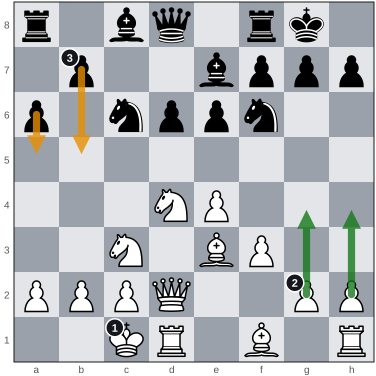
The idea
Kings on different wings turn the game into a pawn race.
- White’s king castled queenside, Black’s king castled kingside.
- White’s g- and h-pawns can storm Black’s king at no cost.
- Black’s a- and b-pawns race at White’s king the same way.
In a game: With the kings on opposite wings, push the pawns at the enemy king and open a line first.
How the lesson begins
Bobby Fischer (White) against Boris Spassky, from their 1992 match. Fischer has castled queenside, so his king is on c1. Spassky has castled kingside, so his king is on g8. When the kings stand on opposite sides like this, each side can push the pawns in front of the enemy king without loosening its own: White’s g- and h-pawns, Black’s a- and b-pawns.
The game becomes a race. The engine rates White as a little better.
A question
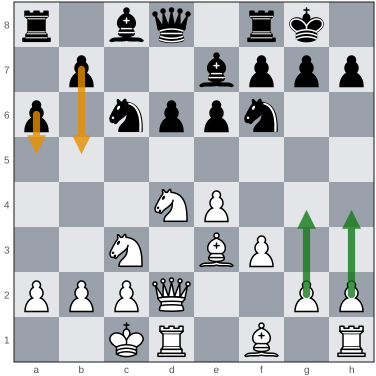
White to move. In a race like this, which pawns should White push?
Show the answer
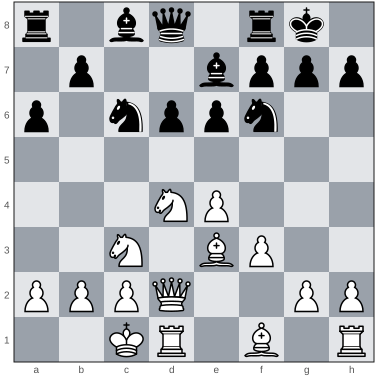
The g- and h-pawns, towards Black’s king.
Right. Those pawns stand in front of Black’s king, and pushing them costs White’s own king nothing. Fischer played g4, one of the engine’s best moves.