Chess lessons › Chess strategy
Attacking weak pawns
Isolated, doubled and backward pawns often need pieces to guard them: pile up on them and win them.
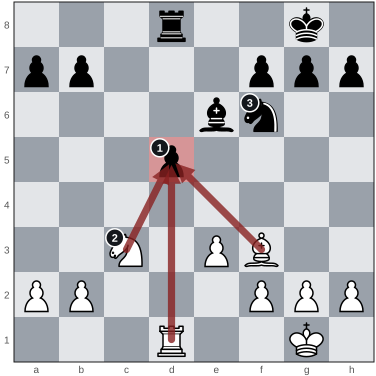
The idea
Isolated, doubled and backward pawns often need pieces to guard them.
- Black’s pawn on d5 is isolated: no pawn can defend it.
- White attacks it with the knight, the bishop and the rook.
- Black’s pieces have to stay on guard to defend it.
In a game: Look for an enemy pawn no pawn can defend, then count its attackers and its defenders.
How the lesson begins
Isolated, doubled and backward pawns are often weak: when no pawn can defend them, pieces have to. That makes them targets. The plan against a weak pawn has three parts: block the square in front of it, so it cannot move; attack it with more pieces than can defend it; and win it, often in the ending.
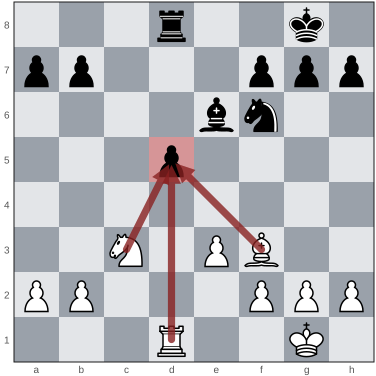
Black’s pawn on d5 is isolated. White attacks it three times, with the knight, the bishop and the rook, and Black defends it three times. The engine already rates White as better.
Find the move
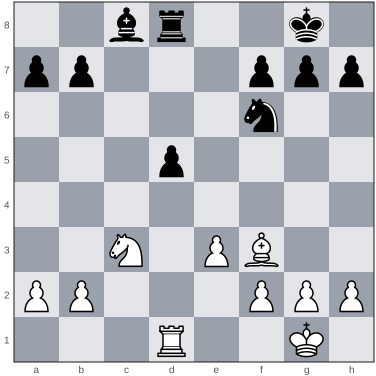
The same pawns, but Black’s bishop stands on c8, so the pawn on d5 has only two defenders: the knight on f6 and the rook on d8. White still attacks it three times. White to move. Win the pawn.
A hint
Count the pieces that attack d5 and the pieces that defend it.
Show the answer
1. Nxd5
Three attackers against two defenders, so the pawn falls. After Nxd5 Nxd5 Rxd5 Rxd5 Bxd5, each side has a bishop and White is a pawn up. The engine rates White as clearly better. Before you take a weak pawn, count its attackers and its defenders.