Chess lessons › Chess strategy
Attacking with kings castled on the same side
With both kings on one side, pawns pushed at the enemy king open your own: attack with pieces first.
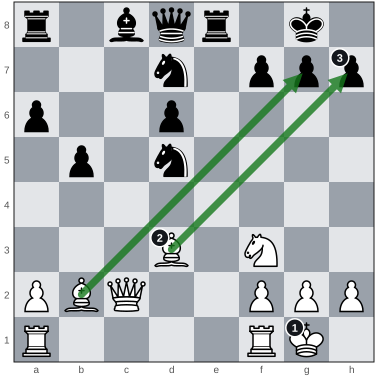
The idea
With both kings on one side, attack with pieces, not pawns.
- Both kings are castled on the kingside.
- The bishop on d3 aims at h7, and no knight on f6 guards it.
- Bxh7+ opens the king, and the queen, knight and rooks join in.
In a game: When both kings castled short, count your pieces near the enemy king before moving a pawn.
How the lesson begins
When the kings have castled on opposite sides, each player can throw pawns at the other king. When both kings stand on the same side, the pawns you push towards the enemy king are also the pawns in front of your own. So the attack is usually made with pieces.
This is Adolf Anderssen against Carl Mayet, from a match in Berlin, 1865. Both kings are castled on the kingside. White’s bishop on d3 aims at h7, the bishop on b2 at g7, and no black knight stands on f6 to guard h7.
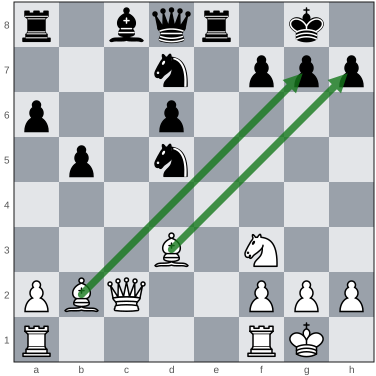
Find the move
White to move. Your pieces point at the black king. Strike.
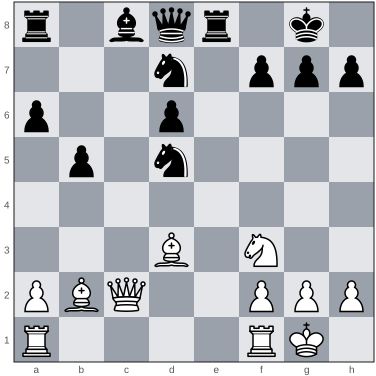
A hint
Look at the bishop on d3 and the pawn on h7.
Show the answer
21. Bxh7+
Bxh7+ takes the pawn on h7, beside the king, with check. Black’s king is left open, and White’s queen, knight and rooks are ready to join. It is the engine’s first choice.
In numbers
In the puzzle bank
3,262 puzzles in GreyChess’s bank practise it. Half of them are rated between 947 and 2,030.
The piece that makes the first move of the answer: queen 41%, rook 24%, knight 20%, bishop 12%, pawn 3%, in puzzles from the Lichess puzzle database.