Chess lessons › Chess strategy
The exchange sacrifice
Giving up a rook for a minor piece, when what you get for it is worth more than the material.
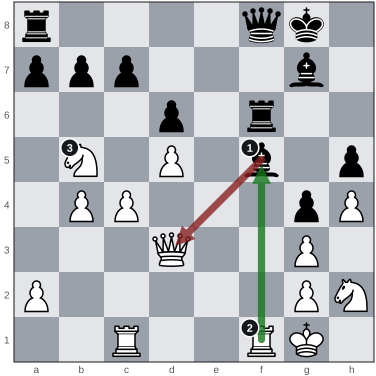
The idea
Giving a rook for a minor piece, for something that lasts.
- Black’s bishop on f5 attacks White’s queen on d3.
- White gives the rook on f1 for the bishop instead.
- The knight on b5 then reaches e6, where no pawn can chase it.
In a game: Give a rook for a minor piece when what you get back lasts: a pawn, a great square, a king.
How the lesson begins
A rook is worth about two pawns more than a bishop or a knight. Winning a rook for a minor piece is called winning the exchange, and giving it up on purpose is an exchange sacrifice. Strong players do it when what they get back lasts: a pawn, a great square for a piece, or an open king.
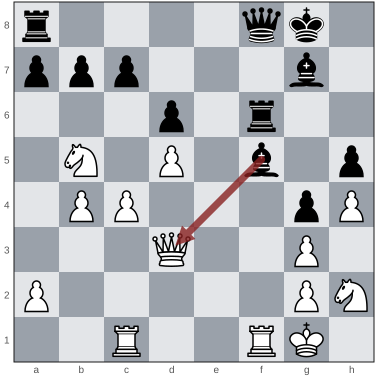
Vladimir Kramnik (White) against Garry Kasparov, Linares 1994. Kasparov’s bishop on f5 attacks White’s queen on d3.
Find the move
White to move. Your queen is attacked. Instead of moving it, give up a rook for the bishop.
A hint
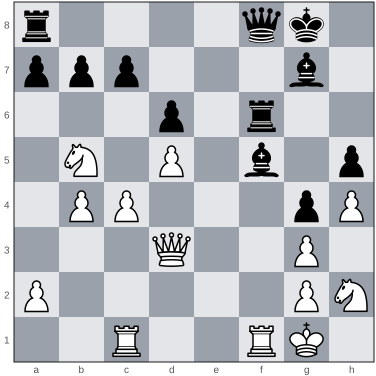
The rook on f1 can take the bishop on f5.
Show the answer
22. Rxf5
Rxf5 gives the rook on f1 for the bishop. It is the engine’s choice, and the engine still rates White as better afterwards. The bishop was Black’s only minor piece that could ever fight for the light squares.