Chess lessons › Chess strategy
Rooks behind passed pawns
A rook belongs behind a passed pawn, your own or the opponent’s, not in front of it.
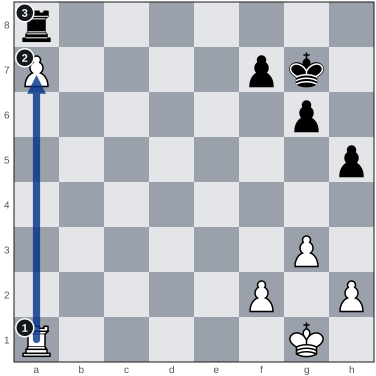
The idea
A rook guards a passed pawn best from behind it, not in front.
- White’s rook stands behind the passed pawn on the a-file.
- It guards the pawn on every square and never blocks it.
- Black’s rook in front is stuck: if it moves, the pawn queens.
In a game: Put your rook behind a passed pawn, your own or the opponent’s, never in front of it.
How the lesson begins
A rook works best behind a passed pawn, on the same file. From there it guards the pawn on every square it reaches, and it never stands in the pawn’s way.
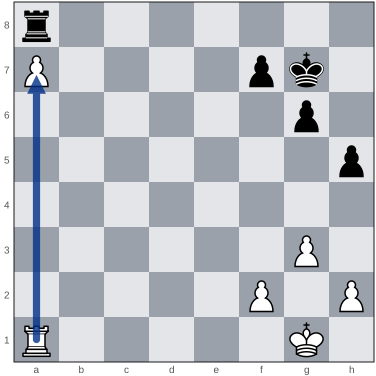
Here White’s rook on a1 is behind the passed pawn on a7. Black’s rook is in front of it, on a8, and it is stuck there: it can only move along the eighth rank, and then the pawn promotes. The engine rates White as winning.
Find the move
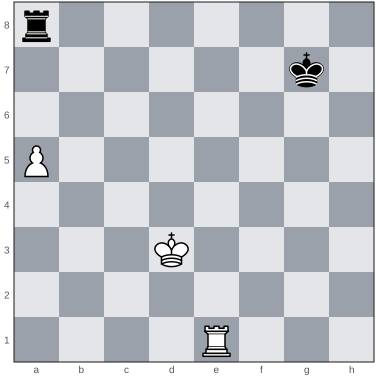
The same idea with fewer pieces. White to move. Only one move wins. Where does the rook belong?
A hint
The rook belongs on the same file as the pawn, behind it.
Show the answer
1. Ra1
Ra1 puts the rook behind the pawn. Now it guards the pawn all the way up the a-file, and White’s king is free to walk over and help. The tablebase, which knows every position with this few pieces, says every other move throws the win away.
In numbers
Positions to practise
64 positions in the study, every result proved by the tablebase: 30 are wins, 29 draws and 5 losses for the side to move, with best play on both sides.