Chess lessons › Chess strategy
Improving your worst piece
When nothing is happening, find the piece doing least and take it to a square where it does more.
The idea
Find the piece doing least and give it a better square.
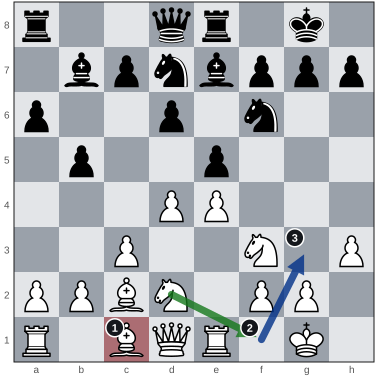
- White’s bishop on c1 has no moves: the knight on d2 shuts it in.
- The knight steps back to f1, and the bishop can see out.
- From g3 the knight eyes f5 and h5, near Black’s king.
In a game: In a quiet position, ask which of your pieces does least, and where it would do more.
How the lesson begins
When there is no tactic on the board, strong players often ask one question: which of my pieces is doing least? Then they take that piece to a better square.
This position comes from the Breyer Defence of the Ruy Lopez. White’s bishop on c1 has no moves at all: the knight on d2 and the pawn on b2 shut it in. So the knight moves out of the way, by a route White uses often in this opening. Watch.
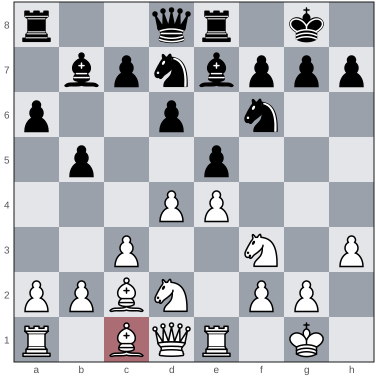
- 13. Nf1 The knight steps back, and the bishop on c1 can see along its diagonal. This is the engine’s first choice.
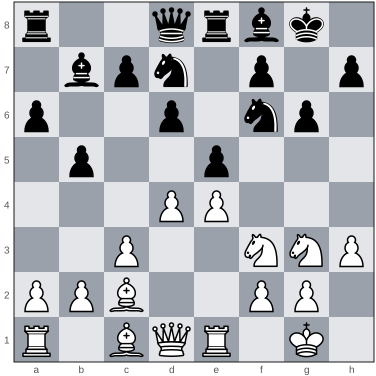
- 13... Bf8 14. Ng3 From g3 the knight eyes f5 and h5, near Black’s king.
- 14... g6 Black takes f5 away from the knight. White’s bishop on c1 can now go to five squares.
A question
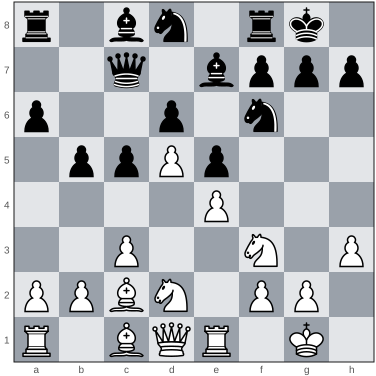
Another line of the Ruy Lopez, the Chigorin Defence, with the centre closed. Which White piece is doing least?
Show the answer
The bishop on c1: it has no moves at all.
Right. The knight on d2 and the pawn on b2 shut it in. The queen on d1 and the rook on a1 have only one move each as well, so freeing the bishop helps them too.