Chess lessons › Chess strategy
Pawn majorities
More pawns than the opponent on one side of the board: trade them down, and one of them becomes passed.
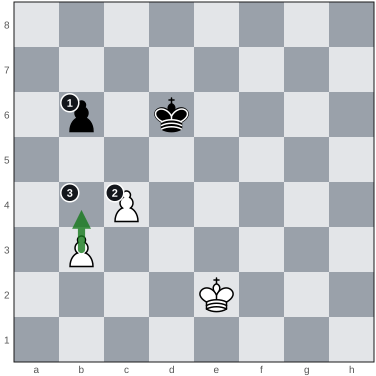
The idea
More pawns on one side: trade them down, and one becomes passed.
- Two white pawns face one black pawn on the queenside.
- c4 has no black pawn on its file: it is the candidate.
- b4 comes first, so the candidate can go to c5 safely.
In a game: Count pawns on each wing. Push the pawn with no enemy pawn in front of it, with support.
How the lesson begins
White has three pawns on the queenside, a2, b2 and c2, against Black’s two, a7 and b7: a pawn majority. A majority does not win by itself. But if pawns are traded one for one, White ends up with a pawn that no black pawn can stop: a passed pawn, one with no enemy pawn in front of it on its own file or the files beside it.
The tablebase, the list of perfect results for endings with few pieces, says White wins this one.

A question
White’s three queenside pawns face Black’s two. If pawns are traded one for one until Black has none left there, what is White left with?
Show the answer
A passed pawn: one white pawn, with no black pawn left to stop it.
Right. Three against two becomes two against one, then one against none. That last pawn is passed.