Chess lessons › Chess strategy
Hanging pawns
Two pawns side by side with no pawns of their own beside them: strong while free, targets once pressed.
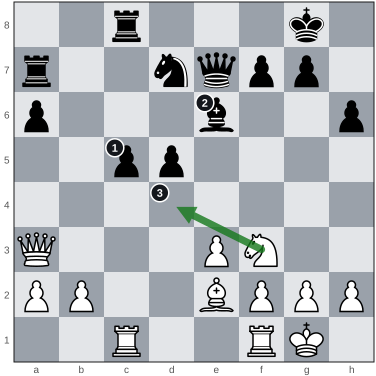
The idea
Two pawns side by side, alone: strong while free, weak once pressed.
- c5 and d5 stand side by side, with no black pawn on the b- or e-file.
- The bishop on e6 is the piece that defends d5.
- Nd4 offers to trade that bishop off.
In a game: Facing hanging pawns? Trade off their defenders, then attack them with a pawn.
How the lesson begins
This is the Tartakower Defence of the Queen’s Gambit Declined, from the sixth game of the 1972 World Championship match, Bobby Fischer (White) against Boris Spassky. Step through the moves.
After dxc5 bxc5, Black has pawns on c5 and d5, side by side, and no black pawn on the b-file or the e-file. A pair like this is called hanging pawns.
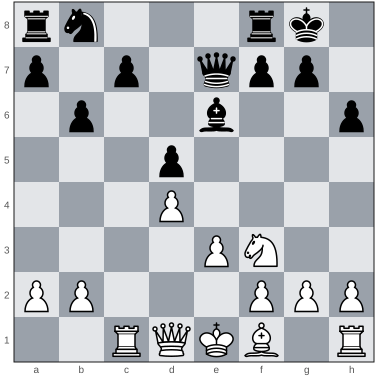
- 12. Qa4 c5 13. Qa3 Rc8 14. Bb5 a6 15. dxc5 bxc5 Black takes back towards the centre. Now c5 and d5 stand side by side.
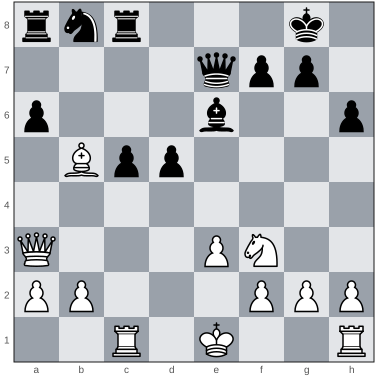
Hanging pawns have two sides. Side by side, they control the four squares in front of them, b4, c4, d4 and e4, and either one can advance. Here the engine rates the game as level.
But they do not defend each other, and no other pawn can defend them. If one of them advances, the other is left behind, and once pieces press them, pieces must hold them.
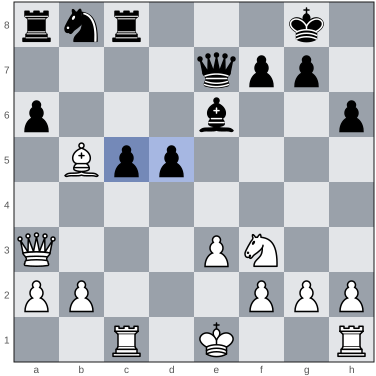
A question
Do the pawns on c5 and d5 defend each other?
Show the answer
No. A pawn defends only the squares diagonally in front of it, so pawns side by side never do.
Right. That is why hanging pawns need pieces to defend them once they are attacked.