Chess lessons › Chess strategy
Symmetrical pawns
When both sides have the same pawns, the pieces, the open file and the move decide.

The idea
With the same pawns, the better pieces and the move decide.
- The pawns mirror each other, so neither side’s pawns are better.
- No white pawn can ever attack c4, so it is an outpost for Black.
- Black is to move, and the rook goes to c4 first, on the open c-file.
In a game: When the pawns mirror each other, find the hole or the open file and get there first.
How the lesson begins
Pawns are symmetrical when they mirror each other: each white pawn has a black twin on the same file, as far from Black’s side of the board as the white pawn is from White’s. Neither side then has a weak pawn that the other lacks, so the pawns alone do not decide who is better.
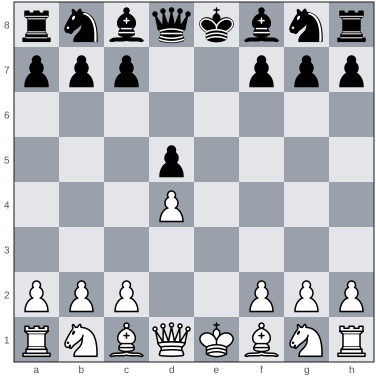
This is the Exchange Variation of the French Defence, from Roberto Grau against Aaron Nimzovich, San Remo 1930. White has just taken on d5.
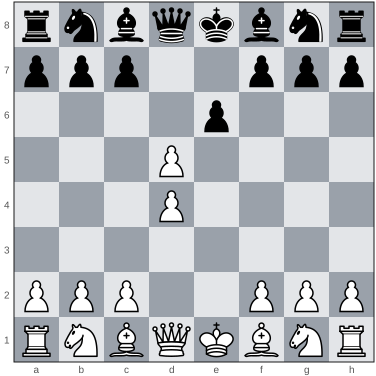
- 3... exd5 Black takes back. Now the pawns are symmetrical: White’s pawns on c2 and d4 have twins on c7 and d5, and so on. The pieces mirror each other too, and the e-file is open: no pawn stands on it.
A question
With the same pawns on both sides, what decides who is better?
Show the answer
The pieces: who has the better ones, who uses the open file first, and whose move it is.
Right. Neither side has a pawn weakness that the other lacks, so small things count. The engine rates this position as level, and the rest of this lesson shows how each of these can tip it.