Chess lessons › Chess strategy
Pawn chains
Diagonal lines of pawns that defend each other: attack the base, and play where the head points.
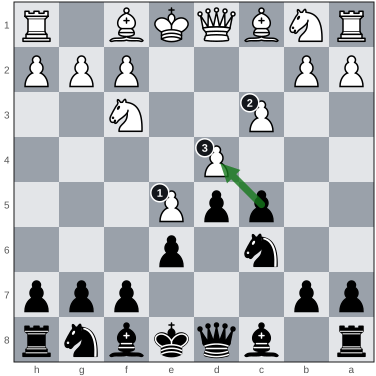
The idea
Attack a pawn chain at its base, and play where its head points.
- White’s chain runs c3, d4, e5: each pawn defended by the one behind it.
- c3 is the base: every pawn in front leans on it.
- Black’s c5 pawn takes on d4 and strikes at the base.
In a game: When pawns stand on a diagonal, find the pawn at the back and attack it with a pawn.
How the lesson begins
Pawns that stand on a diagonal line, each defended by the one behind it, make a pawn chain. This is the French Defence, Advance Variation, and White has built one: the pawn on e5 is defended by d4, and d4 is defended by c3.
The pawn at the back, c3, is the base of the chain. The pawn at the front, e5, is the head. Every pawn in the chain leans on the one behind it, so the usual rule is to attack a chain at its base.
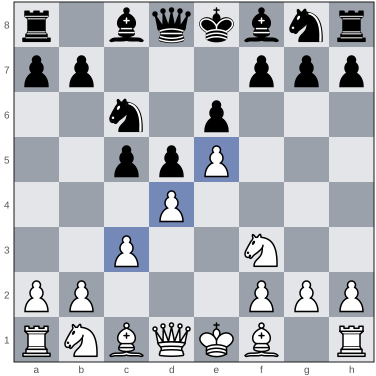
Find the move
Black to move. Attack the chain at its base: your pawn on c5 already attacks d4. Take on d4: when White takes back with the c-pawn, the base leaves c3.
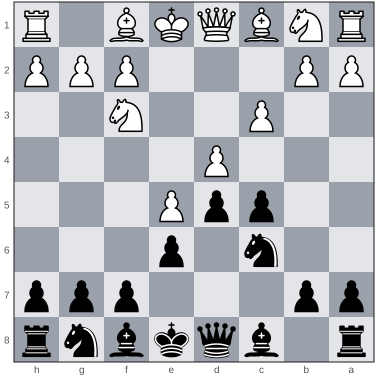
A hint
Your pawn on c5 can capture on d4.
Show the answer
5... cxd4
cxd4 is a standard way to strike at the base, and the engine rates it close to its first choices. Black’s other good moves here, Qb6 and Bd7, add pressure first and often take on d4 later.